



Artificial intelligence is already impacting the way we work and in the future, will have even more significant impacts in all sectors of society, including heavy industry. Inevitably, the questions about how it will be used, where it will be used, and by whom will influence the global green transition. These were questions explored by LeadIT partnering with Engaging India during Almedalen in Gotland. Swedish state secretary for Climate and Enterprise, Daniel Westlén, provided opening remarks for the session reflecting on how the utilisation of AI in all spheres of life will need to be handled responsibly and is one challenge that will define the ongoing bilateral partnership between Sweden and India.
AI will redefine the foundations of productivity, public services, defence, healthcare and energy systems. The question is not whether this transformation will happen; the big question is who shapes it and based on what values and rules.

Daniel Westlén
State Secretary, Minisry of Climate & Enterprise, Sweden
The subsequent panel discussion brought together LeadIT members Stegra and Ecometrix and LeadIT Head of Secretariat, Per Andersson, to consider how AI is currently being used in industry and where the opportunities and risks lie for the future of the green transition.
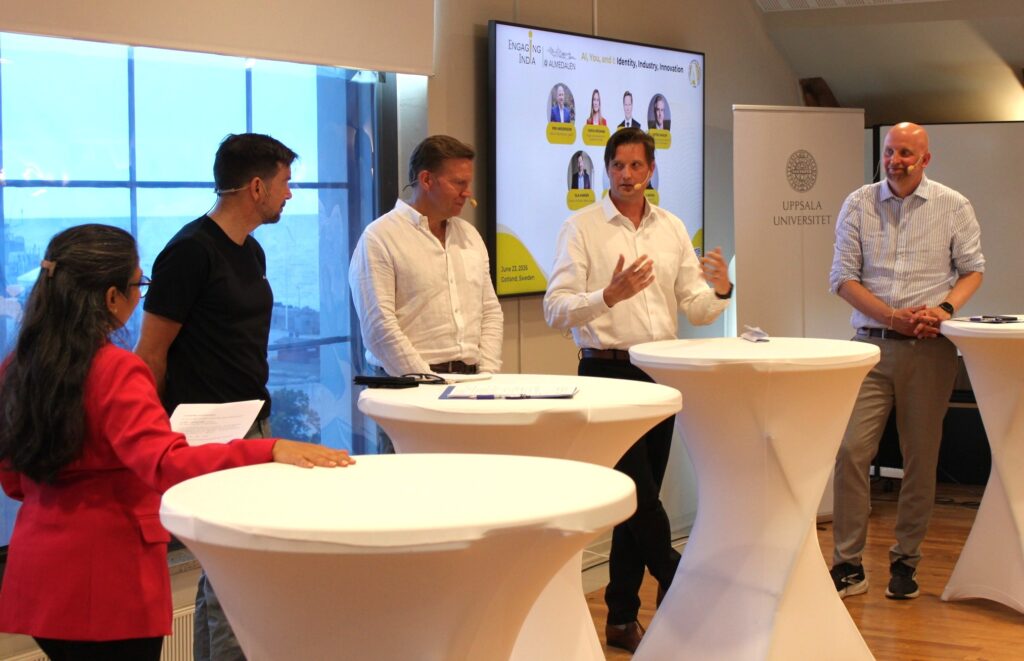
Research published by the UK-based Grantham Research Institute on Climate Change and the Environment has estimated that artificial intelligence (AI) in power, transport, and food consumption could reduce global emissions by between 3.2 and 5.4 billion tonnes of carbon dioxide equivalent annually by 2035. Specifically looking at heavy industry, panel speakers agreed there is a strong potential to support decarbonization using AI solutions including:
- Optimising industrial processes and improving energy efficiency
- Scaling and replicating low-carbon solutions faster
- Supporting better monitoring and analysis of emissions across all scopes
- Strengthening learning between sectors, countries and companies
- Helping industry move further and faster towards low-carbon production
Determining the responsible use of AI within the transition was seen as critical, balancing the environmental benefits against the negative impacts.
Data processing in AI is energy intense as well, so in itself, it is another energy-intensive industry. But if we can get the mix right with fossil-free energy, that can be a win-win for the strengthening partnership between Sweden and India. And of course, the transformative potential of AI is huge.

Per Andersson
Head, LeadIT Secretariat.
Strong partnerships and trust between all actors were seen as key to the sustainable rollout of AI applications for industry. Human expertise remains central for decision-making and inter-learning. Ola Hansén, Stegra explained how they are making use of AI, emphasising this need for oversight: “We have autonomous, AI agents in units working together with human governance, and when they work together, creating new code, new systems, of course, that comes with a boundary that’s been set by humans to ensure safety, security, and our way of working” Building on the theme of trust, Erik Enecker from Ecometrix which was founded to deliver AI solutions within the cement and construction industry, acknowledged there can still be reliability challenges: “I think with the technology, there are still some problems with hallucinations, and you have other things that happen, but I think that those sorts of wrinkles will come out pretty fast. At the end of the day, though, it’s people that need to trust it.”
Watch the full panel discussion
Working together as a stronger force
The event was also an opportunity to reflect upon the increased cooperation between India and Sweden. In a fireside chat, India’s Ambassador to Sweden, Anurag Bhushan, and Swedish State Secretary of Climate and Enterprise, Daniel Westlén, discussed the strengthening India-Sweden Strategic Partnership in a changing world.
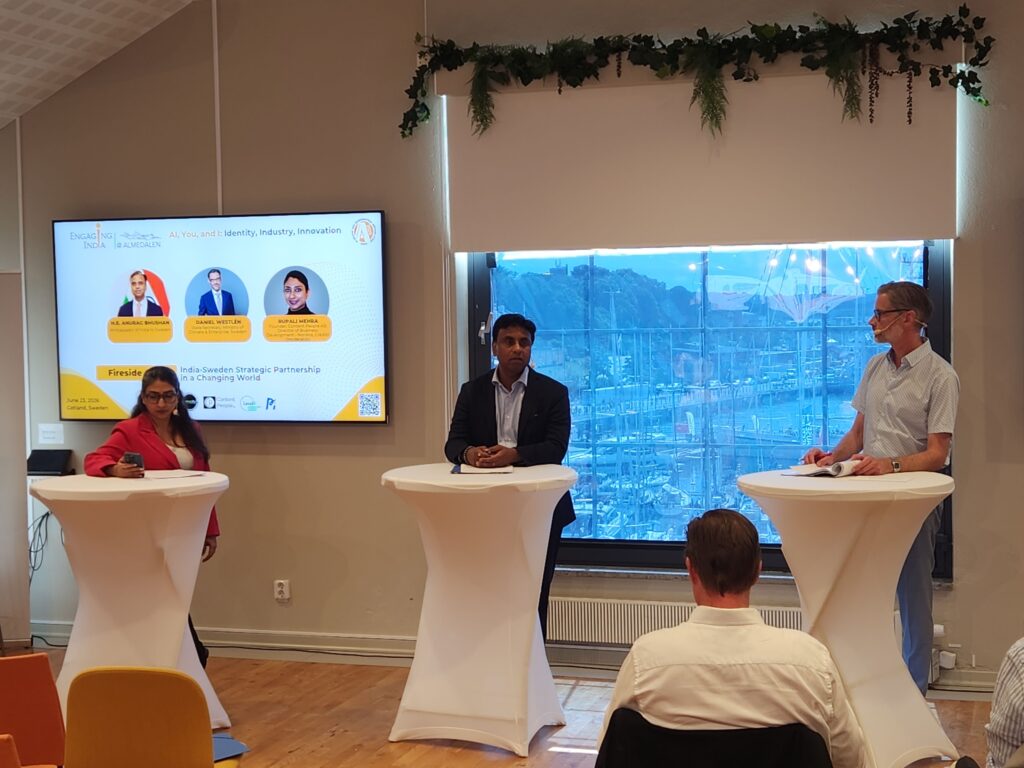
The Ambassador highlighted how the new Partnership, announced in Gothenburg, in May 2026 by the two prime ministers, sits firmly within the framework of the recent India-EU Free Trade Agreement. State Secretary, Westlén explained that around 300 Swedish companies are active in India, and he expected this to increase. He also thought more Indian products and services would enter the Swedish market. Sweden, he said, can support India’s urbanization with clean tech and digital solutions. Shared efforts to accelerate the low-carbon economy were also an essential part of the bilateral cooperation. Working together, he concluded India and Sweden are “a strong force in the world”