Ashok Leyland, world’s 4th largest bus manufacturer, joins LeadIT
This Indian multinational automotive manufacturer has ambitions to lead the transformation of road transport. It hopes membership will accelerate its progress to net zero.
Ashok Leyland is the second largest manufacturer of commercial vehicles in India and the fourth largest manufacturer of buses in the world. With headquarters in Chennai, the company has nine manufacturing plants in India, the United Arab Emirates and the United Kingdom. The company was founded in 1948, becoming Ashok Leyland in 1955 after collaboration with British Leyland.
Ashok Leyland aims to be a frontrunner within the automotive industry and is aiming to accelerate efforts to realize its stated ambition of carbon neutral operations by 2030 and net zero by 2048.
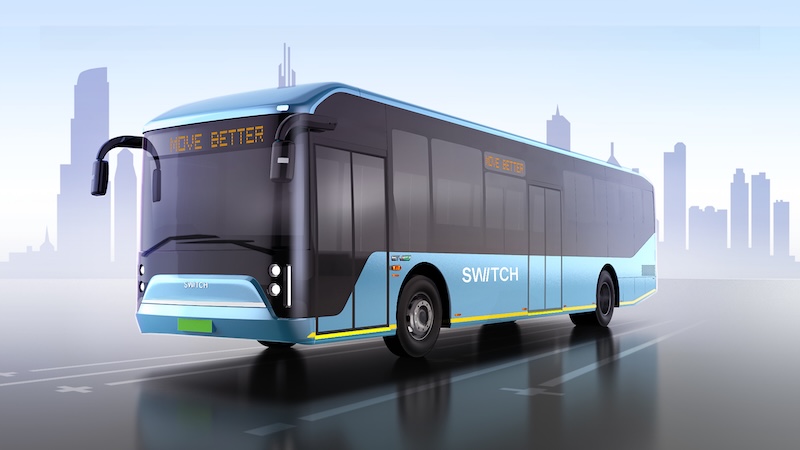
In February 2024, Ashok Leyland began construction of a new factory at Uttar Pradesh in India which will focus on producing electric buses. When complete, the company says that it will, within the next ten years, make 5,000 vehicles annually. Ashok Leyland has also recently delivered its first Hydrogen Fuel Cell Electric Bus, which will be used commercially on Indian roads for public transport.
The company’s membership was announced during a LeadIT event at the Baku Conference of the Parties of the UNFCCC (COP29).
Read our interview with Alok Verma, Head Corporate Strategy & ESG at Ashok Leyland. He explains how through joining LeadIT Ashok Leyland aims to collaborate with global industry leaders to develop scalable solutions for the future of sustainable transport.
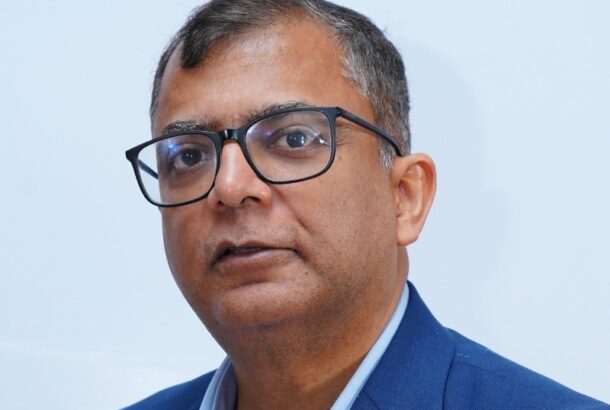
Alok Verma, Head Corporate Strategy & ESG at Ashok Leyland.
Why has Ashok Leyland joined LeadIT?
Sustainability is integral to Ashok Leyland’s identity, and our journey has evolved from mere compliance to embracing competitive sustainability. We are committed to advancing India’s climate goals, supporting the Paris Agreement, and fulfilling our Environmental, Social, and Governance (ESG) responsibilities. Through these efforts, we actively contribute to the global vision of a low-carbon, sustainable economy.This milestone marks our alignment with a global coalition focused on accelerating industry-wide progress toward a resilient global economy. We are proud to be part of this strategic, UN-backed initiative, supported by the World Economic Forum, as we join global efforts to combat climate change.
How will membership of LeadIT support Ashok Leyland’s progress to net zero?
Through LeadIT, Ashok Leyland aims to foster strong partnerships and collaborate with global industry leaders to develop impactful, scalable solutions for the future of sustainable transport. Joining LeadIT at the COP 29 Baku conference marks a significant milestone in our journey toward this transformation.In our pursuit of carbon neutrality, we are focused on achieving sustainable manufacturing practices and meeting our net zero goals across the entire value chain, including our products and solutions. We are eager to continue the dialogue with forward-thinking companies and nations to address the decarbonization challenges that lie ahead.
What will Ashok Leyland bring to LeadIT?
As a member of LeadIT and a key player in an energy-intensive industry, Ashok Leyland is committed to taking transformative action. We actively engage in LeadIT’s three pillars of partnership, working to champion environmentally responsible solutions and drive the commercial vehicle sector towards a greener, more sustainable future.We will continue to lead the way in transforming the automotive ecosystem, forging multiple partnerships and initiatives to reduce our carbon footprint and advance sustainability across the industry. We will work with governments and industries through the LeadIT platform to collaborate, exchange ideas, develop policy guidelines, and solve challenges through innovative solutions.
What is Ashok Leyland’s vision for the future of road transport?
We have consistently been at the forefront of innovation, offering a comprehensive lineup of alternative fuel vehicles, including those powered by CNG, LNG, hydrogen fuel cells, hydrogen engines, and electric powertrains for medium and heavy commercial vehicles.We have aligned to government’s focus on green mobility, and taken significant strides in reducing our carbon footprint, embracing renewable energy in a major way, establishing Registered Vehicle Scrapping Facility (RVSF), part of end of life circularity, and advancing our product stewardship in alternate fuel vehicle and battery electric vehicles.Our goal is to achieve carbon neutral operations by 2030 , RE100 by 2030 and net zero by 2048, which is a testament to our commitment for a cleaner and greener future.
What is needed to deliver that vision?
We intend to gain valuable insights and collaborate for innovative opportunities towards driving adoption of green technologies, including electric vehicles, alternative fuels, and enhanced fuel efficiency.Through sectoral and cross-sectoral learning and with support from Lead IT, we would like to take forward the green transformation and accelerate sustainable mobility solutions.
Ready to join? Contribute to shaping the future of sustainable industrial transformation
Manage Consent
To provide the best experiences, we use technologies like cookies to store and/or access device information. Consenting to these technologies will allow us to process data such as browsing behavior or unique IDs on this site. Not consenting or withdrawing consent, may adversely affect certain features and functions.
Functional
Always active
The technical storage or access is strictly necessary for the legitimate purpose of enabling the use of a specific service explicitly requested by the subscriber or user, or for the sole purpose of carrying out the transmission of a communication over an electronic communications network.
Preferences
The technical storage or access is necessary for the legitimate purpose of storing preferences that are not requested by the subscriber or user.
Statistics
The technical storage or access that is used exclusively for statistical purposes.The technical storage or access that is used exclusively for anonymous statistical purposes. Without a subpoena, voluntary compliance on the part of your Internet Service Provider, or additional records from a third party, information stored or retrieved for this purpose alone cannot usually be used to identify you.
Marketing
The technical storage or access is required to create user profiles to send advertising, or to track the user on a website or across several websites for similar marketing purposes.