


Transition, Trade and Trust – Industry Decarbonisation in Uncertain Times.

In Geneva on 23 and 24 October 2025, the Forum on Trade, Environment and the SDGs (TESS) organised its first annual conference on the theme Trade Cooperation Pathways for Climate Action, Resilience and Justice. The event gathered leading experts from the worlds of trade and climate policymaking, including LeadIT’s Head of Secretariat, Per Andersson. This is his account of the discussions over the two days.
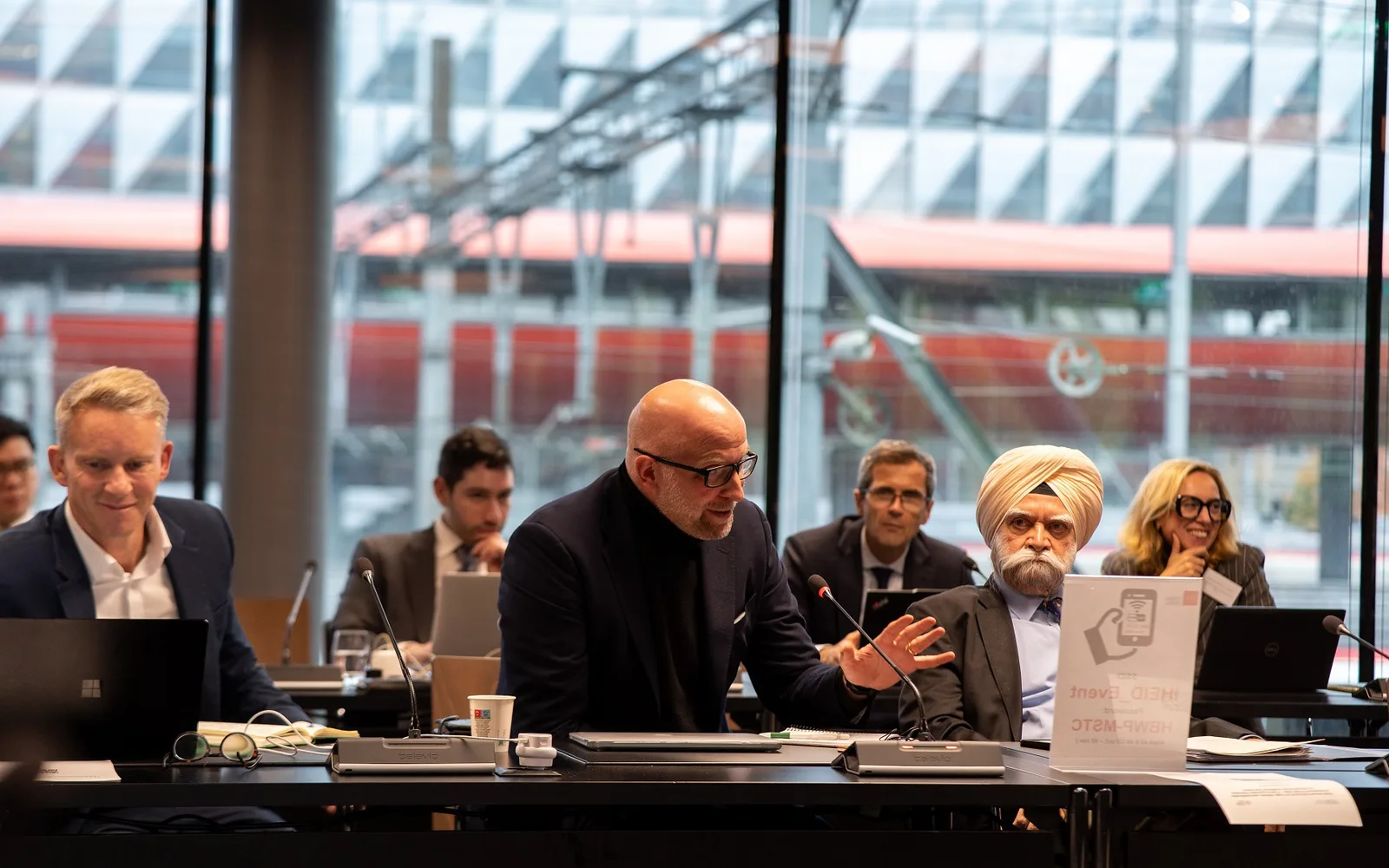
Per Andersson, Head of LeadIT Secretariat speaking at . "Trade Cooperation Pathways for Climate Action, Resilience and Justice" TESS Conference. Photo: TESS
Per Andersson, Head of LeadIT Secretariat. Photo: TESS

Timely discussions

The intersection of trade and climate affairs has long been a topic of global discussion. It is increasingly debated within the multilateral trade bodies of the World Trade Organisation (WTO) and other forums, such as the Group of Twenty (G20), as well as being incorporated into emerging bilateral free trade agreements. An ambition of decarbonization in one region may present a trade barrier in another and vice versa. Ensuring a just and equitable transition requires cooperation and mutual understanding, particularly among leading and emerging industrial nations and regions across the South, North, West, and East. It was therefore with growing importance and urgency that the Geneva-based Forum on Trade, Environment and the SDGs organised the conference “Trade Cooperation Pathways for Climate Action, Resilience and Justice”.  
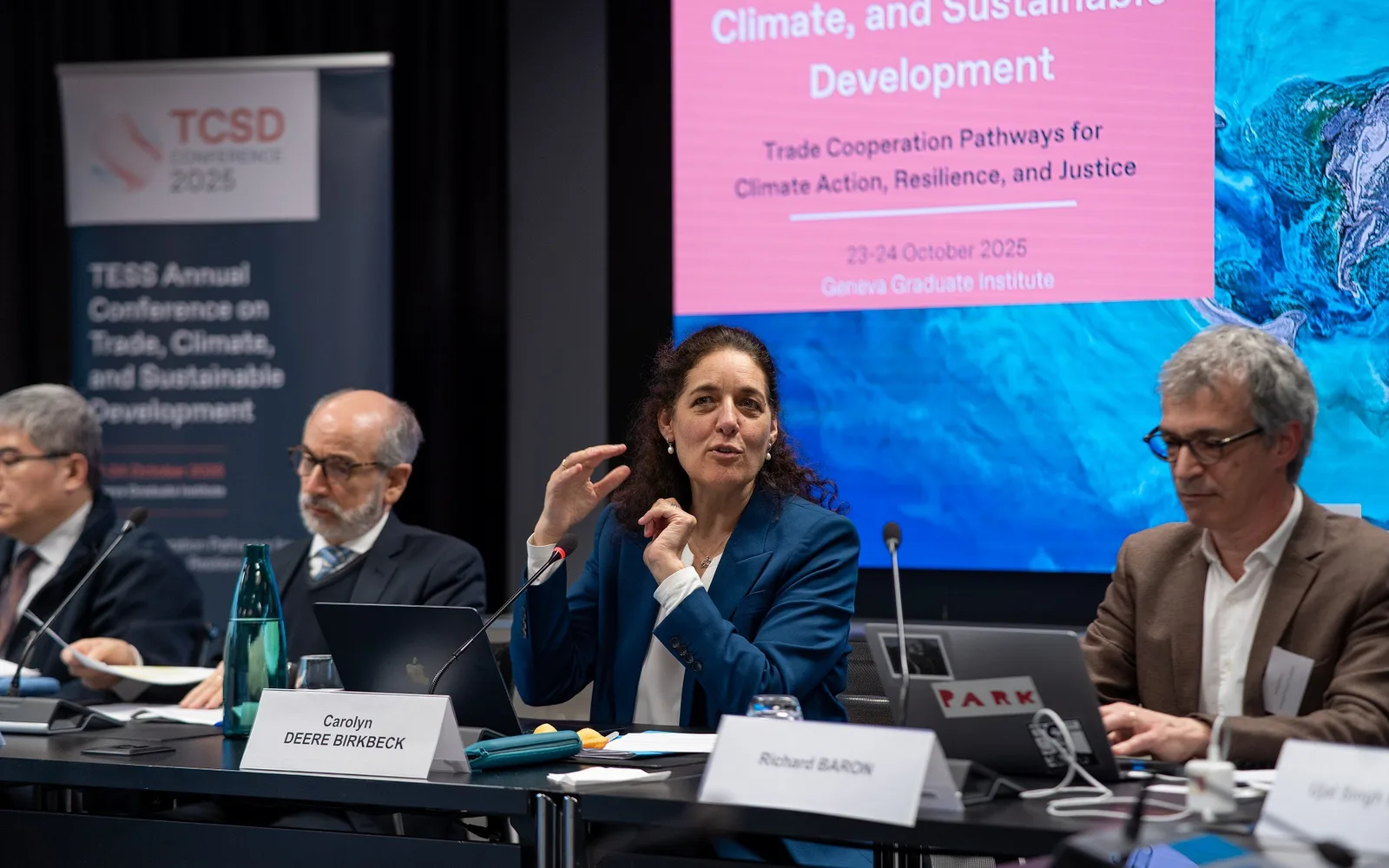
Carolyn Deere Birkbeck Founder and Executive Director, Forum on Trade, Environment, & the SDGs (TESS). Photo: TESS
Carolyn Deere Birkbeck, Founder & Executive Director, Forum on Trade, Environment, & the SDGs (TESS). Photo: TESS

The conference took place as many parts of the global puzzle of industrial decarbonization were being discussed around the world and just a few weeks ahead of COP30 in Belém, Brazil. On the same day, the European Council of EU leaders met with transition and climate on their agenda, WTO reform was in focus in Geneva, and steel continued to dominate global trade discussions. Industries from across the world were calling for fair trade standards. The implications of the recent opinion from the International Court of Justice on the responsibility of states regarding climate action and emission mitigation—issued only a few weeks before the conference—were also highlighted. The introduction of the EU’s Carbon Border Adjustment Mechanism (CBAM), which has dominated the trade-versus-climate debate for years, remained a central topic. Less visible in the headlines, but well noted at the conference, was the rise of carbon pricing and carbon credit systems being developed in many markets, regions, and nations around the world. The growing focus on industrial policy was also evident, including debates about the future of green state subsidy regimes.
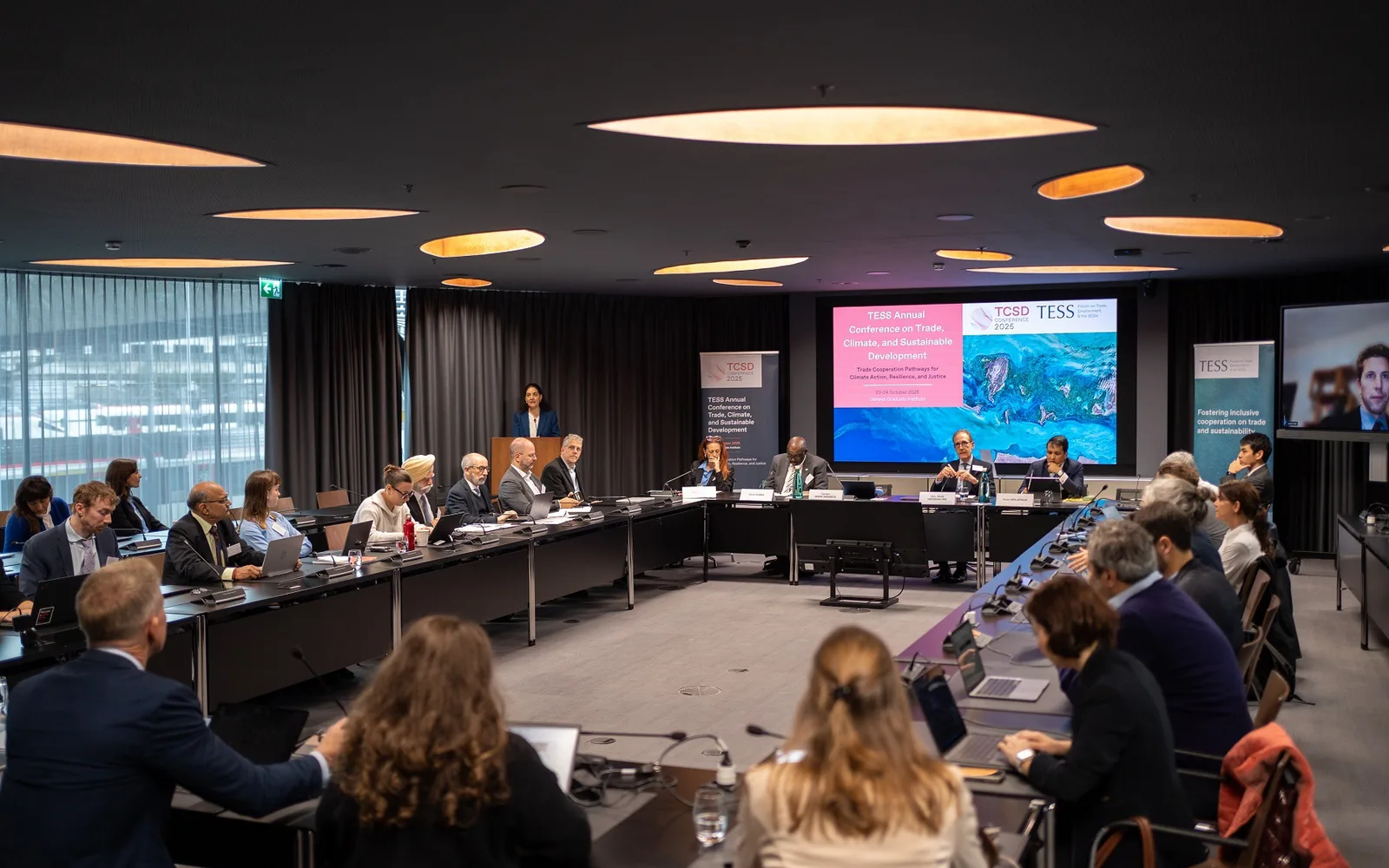
"Trade Cooperation Pathways for Climate Action, Resilience and Justice" TESS Conference. Photo: TESS
“Trade Cooperation Pathways for Climate Action, Resilience and Justice” TESS Conference. Photo: TESS

In an era of uncertainty and growing scepticism toward the rules-based multilateral system, bilateral free trade agreements were reported to be gaining in importance—the EU–India free trade agreement being one such example, where a parallel revival of cooperation included the steel and cement sectors.

The concept of technology transfers has long been on the WTO agenda, often in relation to intellectual property rights, investment, and international law. The dilemma remains – how to make green technology more widely and rapidly accessible to mitigate emissions while still protecting the incentives to develop and invest in that technology. The conference highlighted the importance of demonstrating real cooperation and showing what technology co-development might look like in practice. Ahead of COP30, this served as a strong and timely message—to take on board, and to bring to Belém.

Read the LeadIT brief on green trade published as part of the TESS Synergies series. 

Pathways to inclusive green industrial policy: building shared opportunities across economies

Insights.

You may also be interested in these LeadIT analyses.

View all

23 Oct 2025

Pathways to inclusive green industrial policy: building shared opportunities across economies

Written by Aaron Maltais, Timothy Suljada

Major economies are implementing green industrial policies to speed up decarbonization and transform production. However, many approaches prioritize national competitiveness and security, and risk marginalizing developing countries. The article proposes four categories of measures to align industrial strategies with global fairness, shared climate objectives, and the Paris Agreement’s goals.

Climate Politics

Emerging and Developing Economies

EU

Finance

Industry Transition Partnership

Read full article

3 Oct 2025

From GERD to Green Growth: Ethiopia’s Cement Industry at a Crossroads

Written by Arati Davis, Jane Birch

Built with more than 10 million tonnes of cement, the Great Ethiopian Renaissance Dam (GERD) stands as a powerful symbol of Ethiopia’s economic transformation. The shift from a largely agriculture-based economy is fueling the growth of industry, particularly cement production. New homes, schools, and hospitals are essential, but they also bring the risk of rising emissions.

Cement

Climate Politics

Emerging and Developing Economies

Ethiopia

Leadership

Nationally Determined Contributions (NDCs)

Partnerships

Read full article

24 Apr 2025

Technology Transfer – a WTO thematic session

Written by Jane Birch

On April 1st, 2025, the World Trade Organization (WTO) Committee on Trade and Environment (CTE) held its first thematic session dedicated to technology transfer featuring a range of speakers, including Per Andersson, Head of Secretariat at LeadIT.

Climate Politics

co-development

Finance

Partnerships

technology

Read full article

9 Apr 2025

Sustainable Industrial Transitions: Building global partnerships for inclusive green competitiveness

Written by Aaron Maltais, Timothy Suljada

A high level roundtable focussing on the global implications of the EU’s Clean Industrial Deal which explored opportunities to align green industrial policy with shared climate objectives, while balancing national competitiveness concerns.

Clean Industrial Deal

Climate Politics

EU

Finance

Policy

Read full article

28 Nov 2024

Stakeholders show confidence as India-Sweden Industry Transition Partnership makes progress

Written by Danny Chapman, Jane Birch

The progress that the India-Sweden Industry Transition Partnership has made in its first year, including bringing together stakeholders to identify key technologies and financial resources for decarbonization, was outlined at COP29.

Climate Politics

co-development

Industry Transition Partnership

Partnerships

Policy

Read full article

20 Nov 2024

Five-year report highlights LeadIT’s successes and remaining challenges

Written by Jane Birch

LeadIT has published its first five-year report, outlining its work, successes and impacts so far and the remaining challenges in aligning industry with the Paris Agreement. The report was launched at COP29 in Baku.

Climate Politics

co-development

Net Zero Targets

Partnerships

Policy

Read full article