


What does the update allow users to do that they couldn’t do before?
There are three main areas we have addressed in the updates.
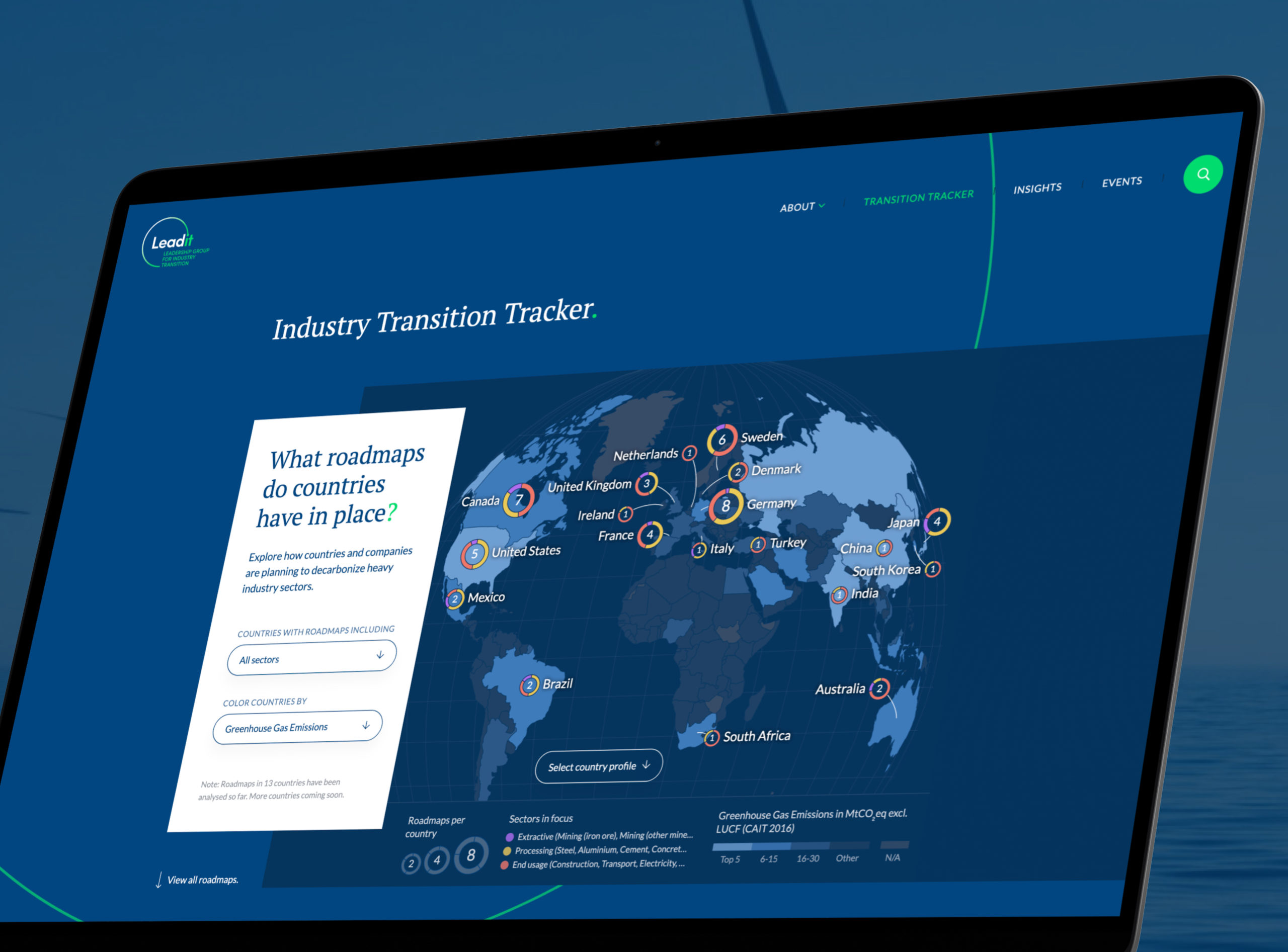
First of all, we have expanded the scope of the Transition Tracker to capture roadmaps available from G20 countries. This includes 25 new roadmaps from an additional ten countries – Brazil, Canada, China, Finland, Italy, Japan, Mexico, South Africa, South Korea and Turkey. These inclusions allow users to identify what plans the world’s biggest carbon emitters have in place for the decarbonization of their industries.
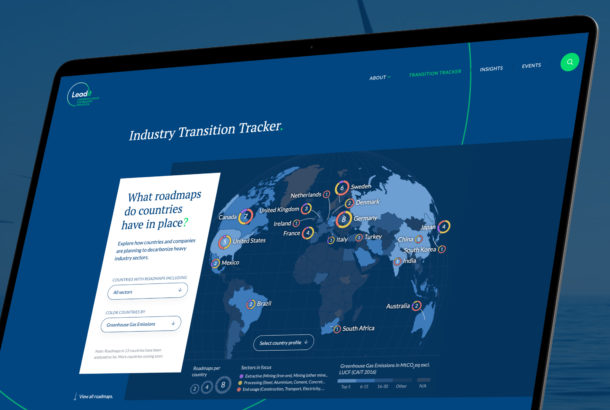
Secondly, we’ve added a new ‘country profiles’ feature that allows users to understand the characteristics of a certain country and to compare it to the roadmaps that it has in place. For instance, users will be able to see how national targets match up to their roadmaps or the industry transition measures included in nationally determined contributions (NDC). Moreover, we are introducing a comparison view feature which will make it possible to compare data across multiple countries, all on one screen. By adding this feature, we believe that users will find it easier to observe similarities and differences in national ambitions and the scale of the challenge to decarbonize industry.
Lastly, the Transition Tracker now includes a roadmap comparison feature which focuses on the requirements that roadmaps cite as essential to achieving decarbonization – i.e. policy levers, technological demands and financial needs. This helps users to easily identify similarities and differences across roadmaps and spot trends. For instance, users can explore whether measures to address decarbonization in certain technologies or types of financing are often demanded together or whether certain industries call for the implementation of the same policy levers consistently across countries.
Who benefits from the new features?
For instance, policy officials can look at how developed other countries roadmaps are and set international benchmarks for their own decarbonization plans. Researchers and civil society actors will benefit from being able to review the plans that countries have in place and probe into why these countries are not doing more to reach net-zero emissions. They can also investigate the gaps between the plans, that are available in the roadmap, and reality. Lastly, industry representatives will appreciate features that allow them to spot global and regional trends in their sectors without having to source multiple roadmaps individually.