

Five-year report highlights LeadIT’s successes and remaining challenges.

20 November 2024

Written by Jane Birch

LeadIT has published its first five-year report, outlining its work, successes and impacts so far and its remaining challenges in aligning industry with the Paris Agreement. The report was launched by the Swedish and Indian Environment Ministers at the LeadIT Annual Summit Meeting held at COP29 in Baku. 

LeadIT 2018 - 24

Download the report
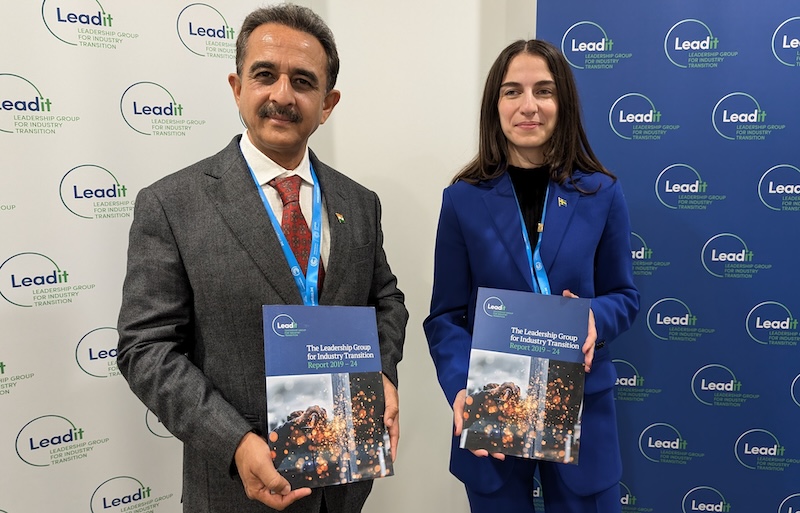
India and Swedish Environment Ministers Shri Kirti Vardhan Singh and Romina Pourmokhtari with the LeadIT first five year report at the LeadIT Annual Summit, Cop 29.
India and Sweden Environment Ministers Shri Kirti Vardhan Singh and Romina Pourmokhtari with the LeadIT first five year report at the LeadIT Annual Summit, COP29.

When LeadIT was launched in 2019, many considered low-carbon transitions in heavy industry to be unrealistic. Five years later, these transitions are beginning to happen through new public private partnerships and enabling shifts in global industrial policy. In its first five-year report, LeadIT highlights how the organization has helped accelerate this transformation. 

Opening of UN Climate Action Summit in 2019.
Opening of UN Climate Action Summit in 2019. UN Photo/Cia Pak

Background and members
LeadIT was announced in September 2019 as a global initiative. It was backed by the Prime Ministers of Sweden and India, after the two countries had been asked by the United Nations to align heavy industry with the goals of the Paris Agreement to reach net zero carbon emissions by 2050. The five-year report explains how LeadIT was launched against a backdrop of escalating environmental crises and heightened public demand for climate justice.

The membership of LeadIT initially consisted of nine countries and several companies. This has now grown to 18 countries and 23 companies.

The most recent additions are Indian automotive giant Ashok Leyland, Canadian green hydrogen pioneers World Energy GH2 and Swedish green steel scale-up Stegra. Several impact stories from members are contained in the report, providing clear signs that industry transition is underway. These stories include the HYBRIT project, created by three Swedish companies to eliminate CO2 emissions from the global steel industry and Indian company Dalmia Cement’s leadership role in decarbonizing the cement industry. 
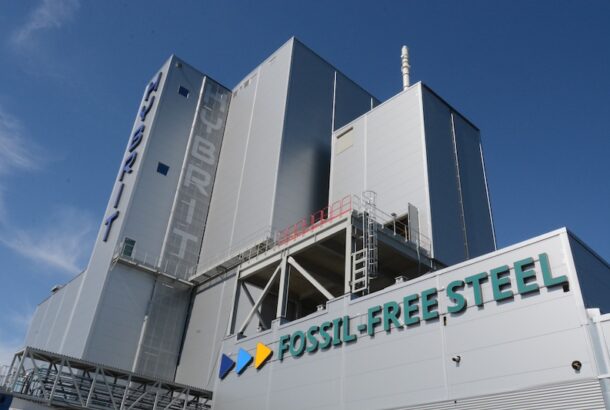
HYBRIT pilot plant for direct reduction, Luleå.
HYBRIT pilot plant for direct reduction, Luleå. Photo: HYBRIT

Key impacts
The report includes a LeadIT milestone timeline and a summary of the progress including:

  • LeadIT’s work to mobilize finance for green industrial transitions
  • The core work by LeadIT to support government and industries in emerging economies produce stakeholder-led roadmaps for achieving decarbonization.  
  • The launch of the Green Steel Tracker and the Green Cement Technology Tracker which have helped drive a global conversation about industry transition. Information from the LeadIT trackers has been used by The Financial Times, Carbon Pulse, Green Steel World, Global Energy Monitor and Industrious Labs.  

The future
Following the success of the previous years in building momentum, LeadIT 2.0 was launched At COP28 in Dubai in 2023, with a specific focus on translating momentum into action on the ground. The work of LeadIT 2.0 is organized into three pillars that will continue until 2026: 

  1. To continue providing a global forum for just and equitable industry transition.
  2. To facilitate technology collaboration. 
  3. To co-develop and foster Industry Transition Partnerships that will help developing economies by improving the effectiveness of international assistance to deliver the enabling conditions that can build a pipeline of bankable low-carbon industrial projects.

"To reach our 2030 commitments much work remains to be done by all…… It will take courage to lead in the next phase of the industry transition. To be globally successful it will take genuine partnerships, mutual understanding and sheer willpower to overcome obstacles. From the individual LeadIT member it will take ambition, creativity and a strong will to work with others to achieve tangible results. In short, it will take guts."

Per Andersson

Head of Secretariat, LeadIT

Insights.

You may also be interested in these LeadIT analyses.

View all

26 Nov 2025

COP 30 Technology, Transition, and Trust – the role of trade and international cooperation for just & equitable industrial transition

This panel event during COP30 in Belém highlighted both some of the opportunities and the complexities involved in using trade to accelerate industrial decarbonization.

Climate Politics

co-development

Emerging and Developing Economies

EU

Partnerships

Read full article

27 Oct 2025

Transition, Trade and Trust – Industry Decarbonisation in Uncertain Times

Written by Per Andersson

In Geneva on 23 and 24 October 2025, the Forum on Trade, Environment and the SDGs (TESS) organised its first annual conference "Trade Cooperation Pathways for Climate Action, Resilience and Justice". The event gathered leading experts from the worlds of trade and climate policymaking, including LeadIT's Head of Secretariat, Per Andersson.

Climate Politics

co-development

Emerging and Developing Economies

EU

Finance

G20

Leadership

Policy

Read full article

23 Oct 2025

Pathways to inclusive green industrial policy: building shared opportunities across economies

Written by Aaron Maltais, Timothy Suljada

Major economies are implementing green industrial policies to speed up decarbonization and transform production. However, many approaches prioritize national competitiveness and security, and risk marginalizing developing countries. The article proposes four categories of measures to align industrial strategies with global fairness, shared climate objectives, and the Paris Agreement’s goals.

Climate Politics

Emerging and Developing Economies

EU

Finance

Industry Transition Partnership

Read full article

3 Oct 2025

From GERD to Green Growth: Ethiopia’s Cement Industry at a Crossroads

Written by Arati Davis, Jane Birch

Built with more than 10 million tonnes of cement, the Great Ethiopian Renaissance Dam (GERD) stands as a powerful symbol of Ethiopia’s economic transformation. The shift from a largely agriculture-based economy is fueling the growth of industry, particularly cement production. New homes, schools, and hospitals are essential, but they also bring the risk of rising emissions.

Cement

Climate Politics

Emerging and Developing Economies

Ethiopia

Leadership

Nationally Determined Contributions (NDCs)

Partnerships

Read full article

24 Apr 2025

Technology Transfer – a WTO thematic session

Written by Jane Birch

On April 1st, 2025, the World Trade Organization (WTO) Committee on Trade and Environment (CTE) held its first thematic session dedicated to technology transfer featuring a range of speakers, including Per Andersson, Head of Secretariat at LeadIT.

Climate Politics

co-development

Finance

Partnerships

technology

Read full article

9 Apr 2025

Sustainable Industrial Transitions: Building global partnerships for inclusive green competitiveness

Written by Aaron Maltais, Timothy Suljada

A high level roundtable focussing on the global implications of the EU’s Clean Industrial Deal which explored opportunities to align green industrial policy with shared climate objectives, while balancing national competitiveness concerns.

Clean Industrial Deal

Climate Politics

EU

Finance

Policy

Read full article