


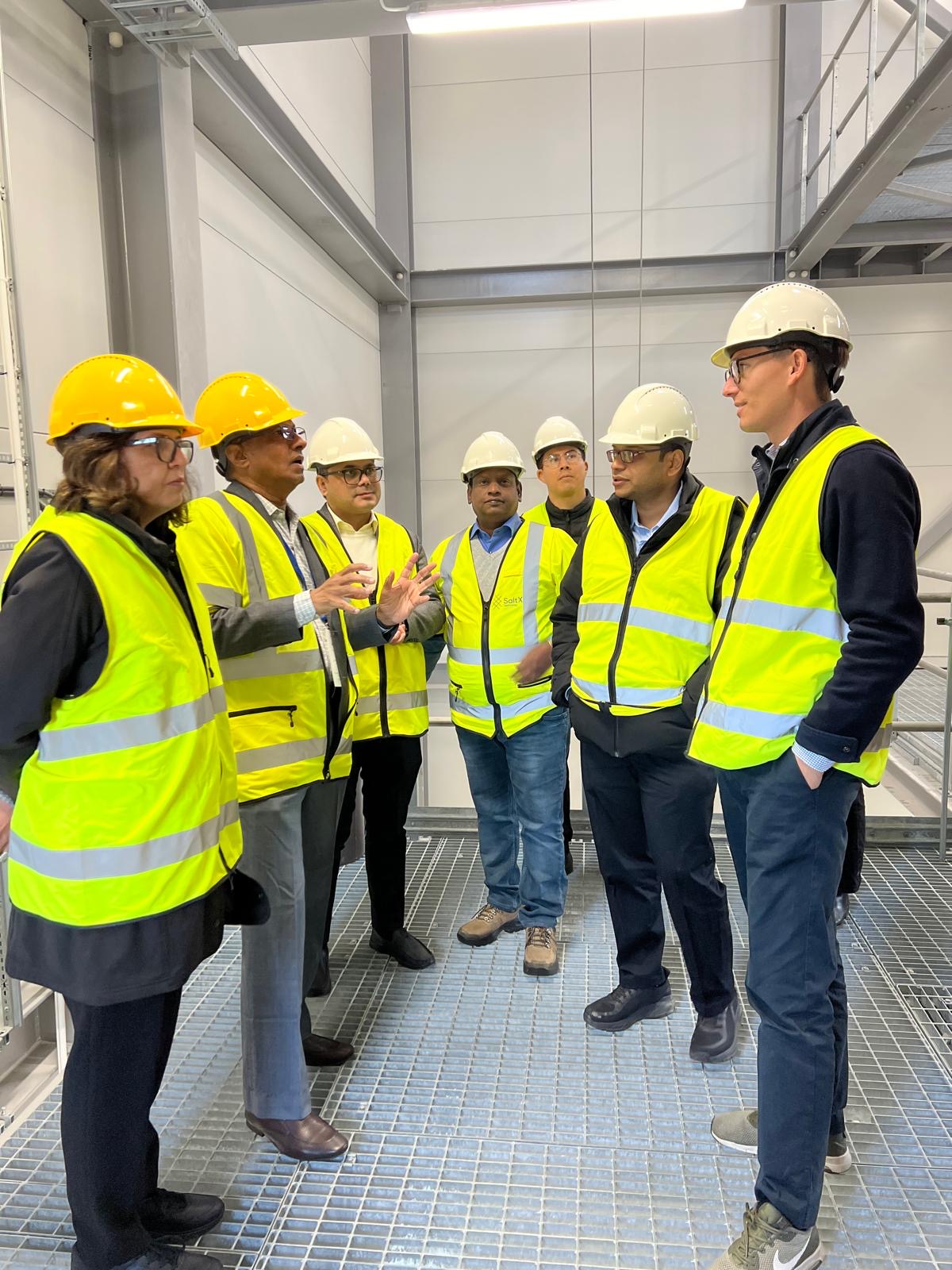
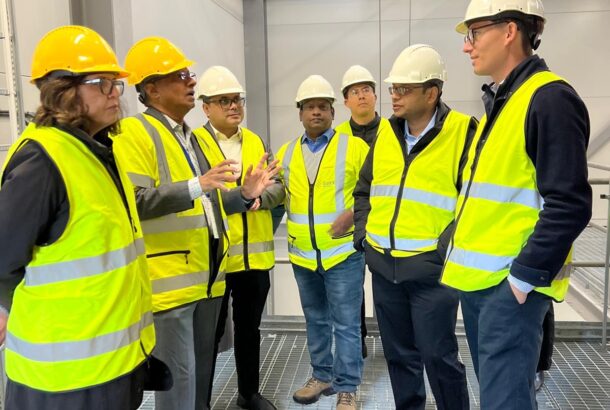
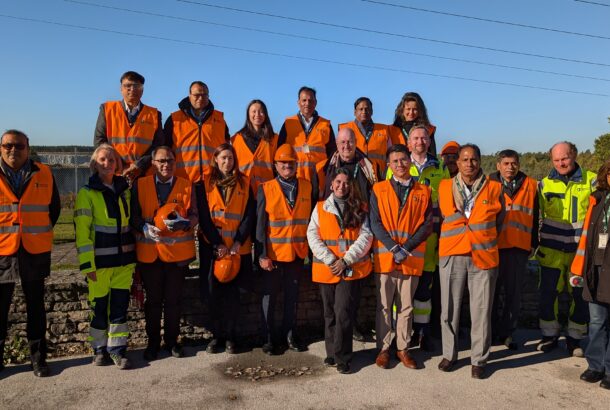
The delegation was hosted by LeadIT as part of the work the Group does to support partnerships that can drive industry decarbonization. The visit aimed to exchange insights on technology development and deployment, and to identify future opportunities for collaboration – including, but not limited to, the India-Sweden Industry Transition Partnership. The programme included visits to Cemvision, SaltX Technology and Heidelberg Materials to explore innovative projects offering low carbon solutions for cement production.
Day 1
The first day of the delegation visit was spent in Stockholm starting with a presentation at Stockholm Environment Institute from RISE (Research Institutes of Sweden). Dr Katarina Malaga, a professor in sustainable construction, presented and answered questions on the research for low-carbon cement and concrete technologies.
This was followed by the delegation’s first meeting with a LeadIT company member, Cemvision. Cemvision is a green scale–up company working to reinvent cement using binders made from industrial waste products instead of virgin limestone. The visiting delegation were interested in understanding how such circular economy solutions might be applied in India.Day 2
The delegation spent the day with a site visit to SaltX Technology in Hofors in central Sweden to learn more about the potential for electrification to reduce carbon emissions in cement production. SaltX, also a LeadIT member, wants to make fossil fuel-fired heating a thing of the past in high-temperature industries like cement. At Hofors it has built an Electric Arc Calciner which replaces fossil-fuels with electric plasma technology.
Day 3
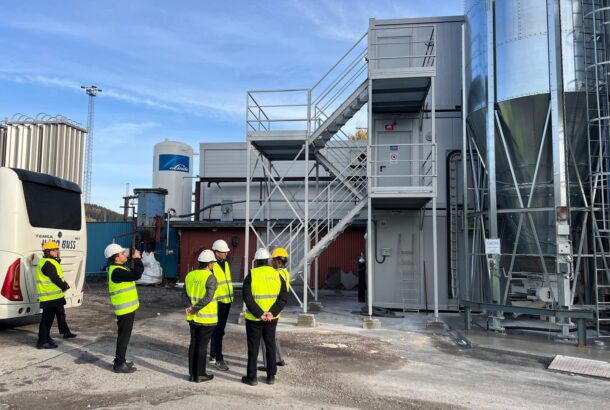
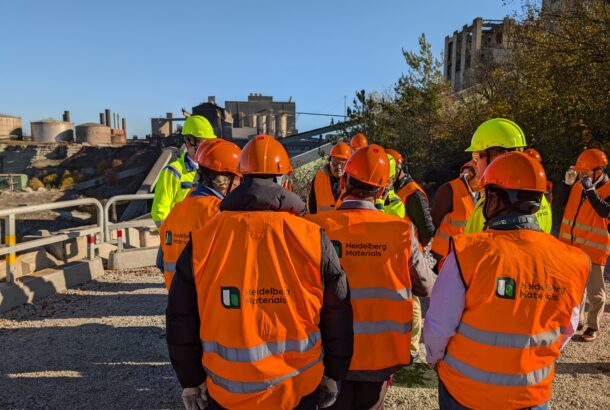
The Swedish island of Gotland was the location for the final site visit for the delegation. In Slite, Heidelberg Materials operates one of Europe’s largest cement works, providing three quarters of all the cement used in the Swedish market. As such it is a significant contributor to CO2 emissions in Sweden and Heidleberg Materials is constructing a carbon capture and storage project which when completed will play a vital part in the country meeting its climate targets
The visit to Sweden concluded with a reception hosted at the Indian Embassy in Stockholm. Rakesh Tiwari, Chargé d’Affaires, welcomed the delegation and emphasized the importance of the relationship between India and Sweden in working to achieve shared environmental goals. The Swedish State Secretary for Climate and Environment, Daniel Westlén also emphasised the importance of joint efforts for a green transition and applauded stronger India-Sweden ties.
Reflecting at the end of the visit to Sweden, Pashmin Dee, Sustainability Manager for GCCA India said they were glad to support and participate in the International Cement Delegation to Sweden, organized by LeadIT, adding “The visit offered crucial insights into cutting-edge technologies such as Cemvision’s resource-efficient cement, SaltX’s Electric Arc Calciner, and Heidelberg Materials’ carbon capture and storage (CCS) project at Slite. These innovations are essential for driving the decarbonization of the cement industry. We hope to foster further collaborations with LeadIT to accelerate transformation in the sector, ensuring a more sustainable future for the cement industry”
Next Steps
Looking to the future Felipe Sanchez from LeadIT said “I’d like the representatives from industry and government to go back and reflect on what they’ve seen here in Sweden. I’d like them to consider the mix of enabling conditions and solutions that have given rise to these projects in Sweden and what could lead to ground-breaking decarbonization projects in India”