
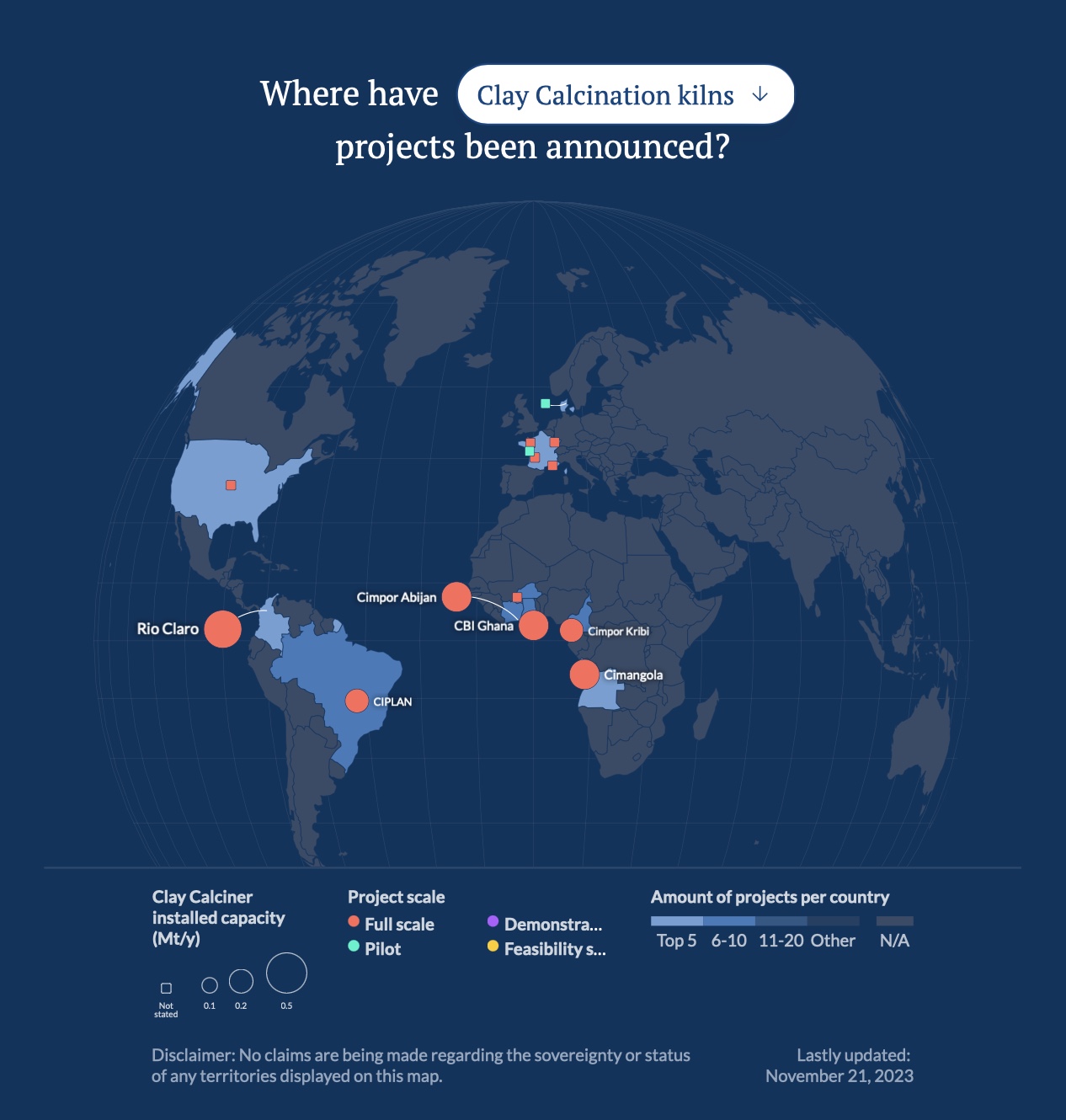
Concrete and cement are the world’s most used building materials. They are vital to the built environment for homes, offices and infrastructure, but account for around 7% of global CO2 emissions. Tracking projects which deliver emissions reductions is an important part of the roadmap to decarbonization and the Global Cement and Concrete Association (GCCA) and Leadership Group for Industry Transition (LeadIT) Green Cement Technology Tracker now includes project announcements of clay calcination kilns.
The tacker, hosted by LeadIT was launched last year and already tracks carbon capture projects and pilots across the globe,. The addition of calcined clay projects broadens the tracking scope for technologies that support carbon dioxide emissions reductions in the cement sector.
The GCCA’s Roadmap to Net Zero estimates that by using calcined clays in the production of cement, instead of limestone, it is possible to reduce emissions in the production process by 11%.
Karen Scrivener, Professor at Ecole Polytechnique Fédérale de Lausanne (EPFL) in Switzerland is an expert on the use of calcined clays and was recently appointed to the United Nations SDG group. She said “Ultimately, we’re constrained by the materials we have on earth. There’s no overnight replacement to cement. However the development of calcined clays, which are widely available, offers the world an exciting opportunity to reduce CO2 emissions in cement production……we have to do all we can to decarbonise cement, whilst recognising where the demand is rightfully coming from, to improve people’s lives across the planet, including the global south.”