


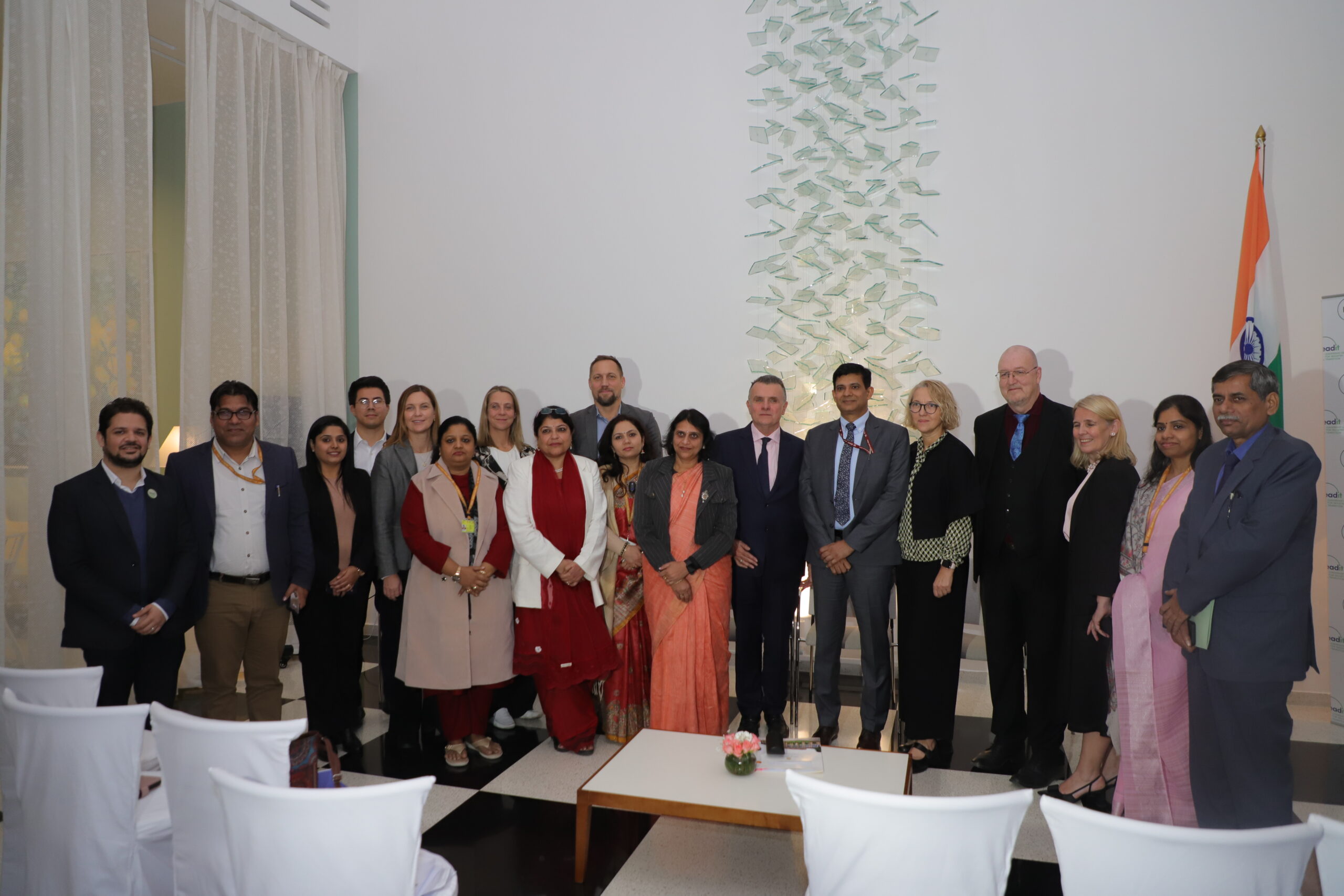
Seven innovative projects have been selected to conduct pre-pilot feasibility studies in India under the LeadIT Industry Transition Partnership (ITP) with funding from the Indian Department of Science and Technology and the Swedish Energy Agency. These partnerships between Indian companies with ambitions to build low-carbon pathways and Swedish technology innovators will accelerate decarbonization in India’s steel and cement sectors.
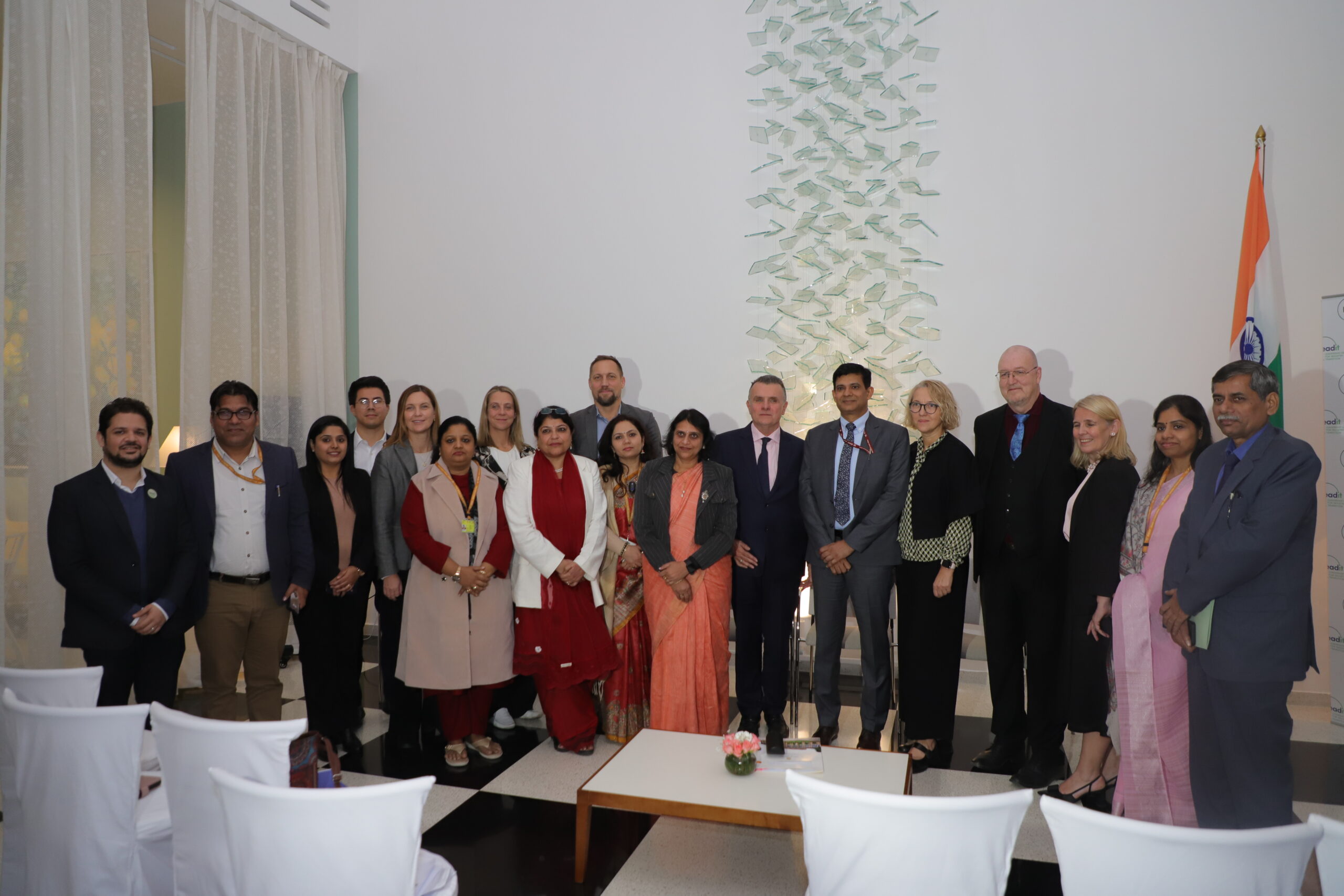
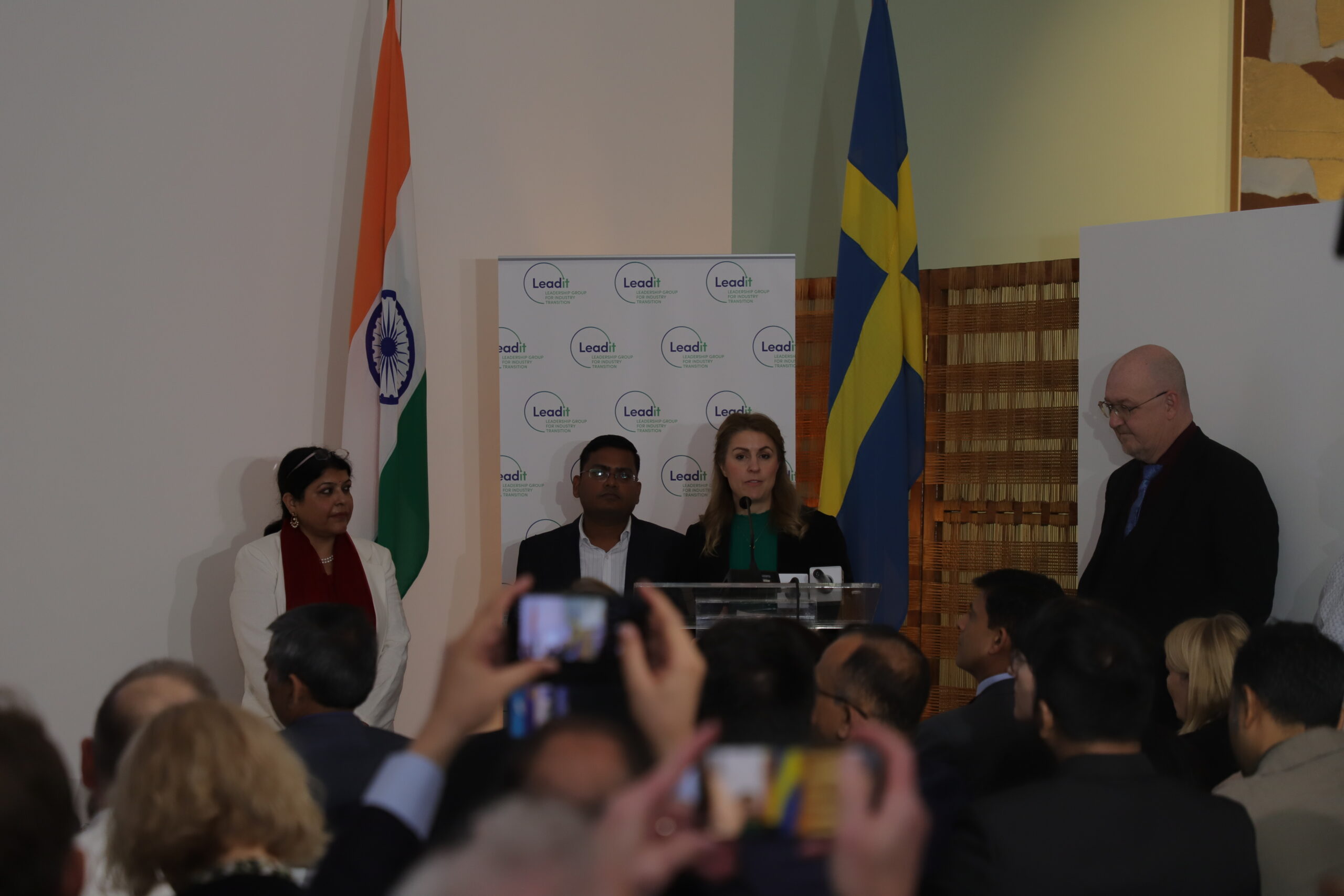
The projects were presented at an official event at the Swedish Embassy in New Delhi on 8 December 2025.
From ideas to projects: how the partnerships were formed
The ITP working groups held the first kick-off meeting in New Delhi in April 2024, bringing together government and private stakeholders, outlining the overall vision for the ITP and the ambition to initiate a set of projects by COP30.
Identifying technology areas
The Steel Group identified five technology areas for collaboration – hydrogen-based direct reduction of iron, biomass, operational excellence in blast furnaces, beneficiation of low and tailing grade iron ore, and carbon capture, utilisation and storage. In a workshop in February 2025, Indian and Swedish steel industries identified 19 specific project topics in these areas to explore collaboratively. The Cement Group facilitated delegation visits to cement industry plants in Sweden and India to identify collaboration opportunities, followed by workshops to facilitate business-to-business matchmaking discussions in March 2025.
Calls for proposals
Following on the work by the Steel and Cement Working Groups, the Innovation Working Group announced calls for proposals inviting joint applications from Indian and Swedish industry partners, focusing on low-carbon technologies in the steel and cement sectors. From the applications received, a total of seven technology feasibility projects with 18 industry and research partners were selected by the Indian Department of Science and Technology and the Swedish Energy Agency.
Explore more details about all the projects below.
Tata Steel, Green14 & IIT Hyderabad – Microwave Plasma-Assisted CO2 Conversion of Blast Furnace Off-Gas
This project explores the microwave plasma-assisted conversion of blast furnace CO₂ into carbon monoxide (CO), which can be reinjected as a reducing agent. The consortium brings together GREEN14 in Sweden with Tata Steel and IIT Hyderabad in India. IIT Hyderabad will develop catalysts and membranes, GREEN14 will adapt and validate its plasma reactor with digital twin modelling, and Tata Steel will provide industrial integration and techno-economic assessment. The outcome will be validated reactor concepts, materials, and feasibility analyses that pave the way for pilot and demonstration projects, strengthening Indo–Swedish cooperation and supporting net-zero industrial pathways.
Tata Steel, Cemvision, JK Cement & IIT-ISM Dhanbad – Steel Slag Reborn: Dual Value generation through high metallic recovery and sustainable supplementary cementitious material (SCM) production
The project will work to create industrial symbiosis, where steel industry by-products become a resource for cement production. With Cemvision’s technology, even low-grade BOF/LD- and EAF slags can be chemically modified and transformed into high-performance feedstock for ultra-low CO₂ cement. At the same time, valuable metals can be recovered and returned to the steel industry, strengthening circular resource use. In collaboration with Tata Steel, IIT-ISM Dhanbad, and JK Cement, this project shall prepare for a demonstration plant in India that reduces both climate impact and the need for virgin raw materials.
Ambuja Cement, EcoTech Solutions, IIT Bombay – Feasibility study for establishing an integrated carbon capture and utilization unit at a cement industry facility
CO2 from the cement production process, a major source of emissions, is captured, purified, and then used to create new products. In this project, IIT Bombay contributes with in-house developed water-based CCU technology, engineering leadership, prior lab/pilot experience, and methodology for scalable integration in an industrial environment. EcoTech from Sweden optimizes energy balance, operating strategies, and a techno-economic analysis that also benchmarks amines. Ambuja Cements Ltd is the industrial host providing actual operational and emission data, site conditions, and operational reliability and cost-effectiveness requirements.
Ecometrix, Prism Johnson RMC & Datta Meghe College of Engineering – feasibility study for AI-Based platform ACORN to optimize concrete mix designs for reduced climate impact
This project is a feasibility study in which Swedish company Ecometrix AB, together with India’s Prism Johnson Limited, and with the support of Datta Meghe College of Engineering (DMCE- Nave Mumbai), evaluates the potential to adapt and implement the AI-based platform ACORN for concrete mix optimization in India. The study includes mapping local data and material conditions, testing model performance under regional circumstances, and developing customized methods for secure handling of sensitive company data. The results will determine whether the technical, practical, and commercial conditions exist for a future pilot and large-scale implementation, aiming to reduce the climate impact of concrete without compromising quality or cost.
Jindal Steel & Power, Kanthal & SWERIM – Electric heating methods for future CO2 neutral steel production
The project aims to explore the potential of electric heating technologies to reduce CO₂ emissions in the Indian steel industry. In collaboration Kanthal and Swerim from Sweden and Jindal Steel and Power, India, will assess concepts for electric gas heating, focusing on hydrogen and other process gases in ironmaking process, with the specific aim to reduce or eliminate CO2-emissions. Electric process gas heating has the potential to enable fossil-free iron- and steelmaking, if the electricity supply is fossil-free. The outcome will include a technical feasibility study, process concept descriptions, and a roadmap for future pilot activities, supporting the transition to fossil-free steel production in India.
Metsol AB, Höganäs AB, Höganäs India, IIT Bhbaneswar & Aarti – Electrified Green Ironmaking Pilot Using Rotary Kiln Technology in India
This study aligns closely with the Indian national priorities by targeting coal-based rotary kiln DRI — the highly carbon-intensive production route in India. The project aims to conduct a feasibility study for a pilot plant based on a novel fossil-free ironmaking process using hydrogen and an electrically heated rotary kiln. The concept will be evaluated in an Indian industrial context through collaboration between Metsol AB, Höganäs AB, Hoganas India Ltd and IIT Bhbaneswar. The study will analyse the technical and economic viability of a pilot plant in India, including energy requirements, CAPEX/OPEX levels, layout considerations, and regulatory conditions. The outcome will support a Go/No-go decision on launching a pilot project.
Capitimise AB & My Home Industries Pvt. Ltd (Maha Cement) – Decarbonization of cement production with carbon capture
Captimise AB (Sweden), part of the Andritz Group, is partnering with My Home Industries Pvt. Ltd. (Maha Cement), a leading Indian business conglomerate with strong presence in cement, construction, real estate, media, and green energy. Maha Cement plants have already achieved steady reductions in CO₂ intensity through green energy and energy efficiency upgrades, alternative fuels, and WHRS integration – this initiative is designed to build on that momentum. The project will screen three carbon capture technologies—amine absorption, hot potassium carbonate, and membranes—for potential application at My Home Industries’ cement plants. The project aims to identify the most techno-economically viable capture pathway, develop a process design package for a future pilot plant, and assess market opportunities for e-methanol.