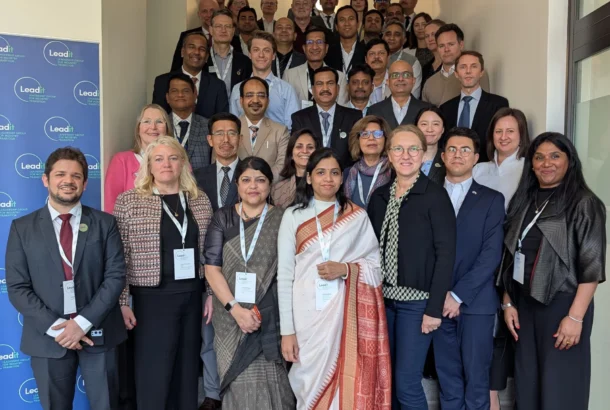


In early May 2025, a delegation from India visited Sweden as part of the LeadIT Industry Transition Partnership (ITP) to see innovation in action. The visit aimed to provide real-world insight into operational practices and to deepen understanding of implementation challenges and practical solutions.
A green industrial revolution in the north of Sweden
No visit to Sweden focused on industry decarbonization would be complete without a trip north, close to the Arctic circle, where a transformation is underway. This area, already at the heart of Sweden’s production of fossil-free energy and with access to the raw materials needed for the green transition, is now a focal point for sustainable industry – especially steel.
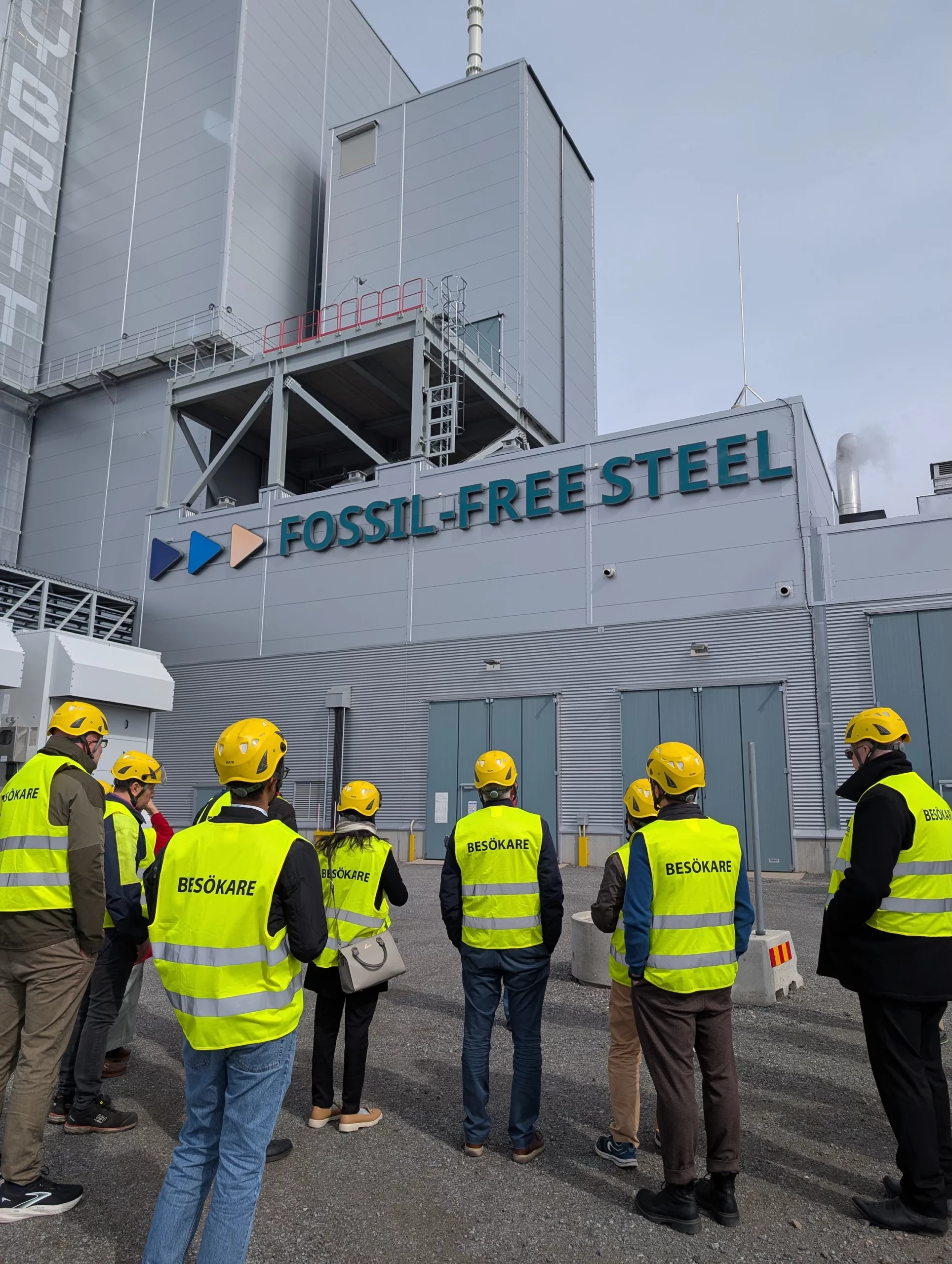
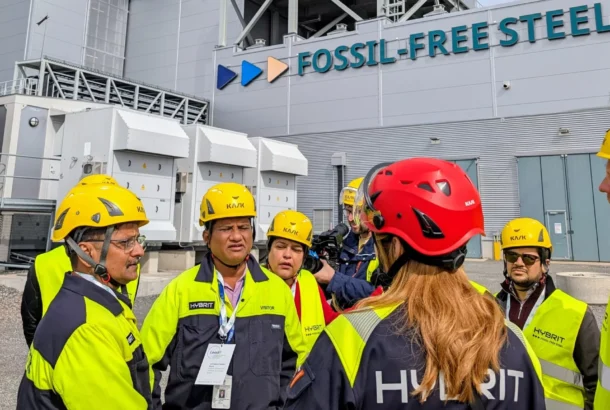
One of the projects attracting international attention is HYBRIT in Luleå, a partnership between LeadIT members SSAB, Vattenfall and LKAB. HYBRIT has demonstrated that hydrogen can be used in fossil-free manufacturing of iron and steel – something that could fundamentally change the iron and steel industry.
The Indian delegates began their visit to Sweden with a tour of the HYBRIT facility, guided by Helena Sundberg, Senior Office & Visitor Manager at HYBRIT, and accompanied by Jesper Kansbod, Head of Governmental Relations, SSAB.
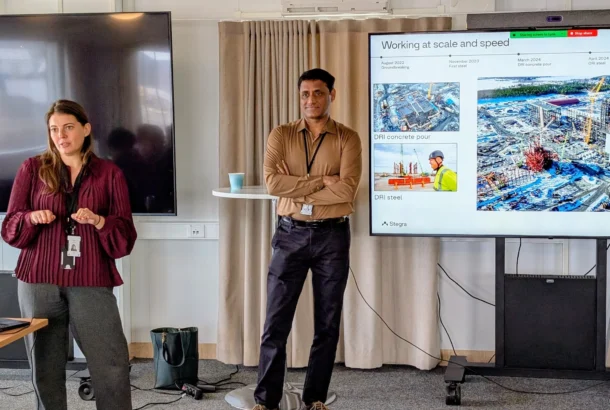
Stegra, also a member of LeadIT, shares this vision of a fossil-free future for steel and is building Europe’s first greenfield mill in half a century. The site in Boden spans 270 hectares and is divided into two parts: the main area for iron and steelmaking, plus a 700-megawatt hydrogen plant. A guided coach tour of the construction site was followed by a detailed presentation about the project with Durgesh Gupta, Senior Vice President, Global Iron Making Technology and Luisa Orre, Chief Business Development Officer.
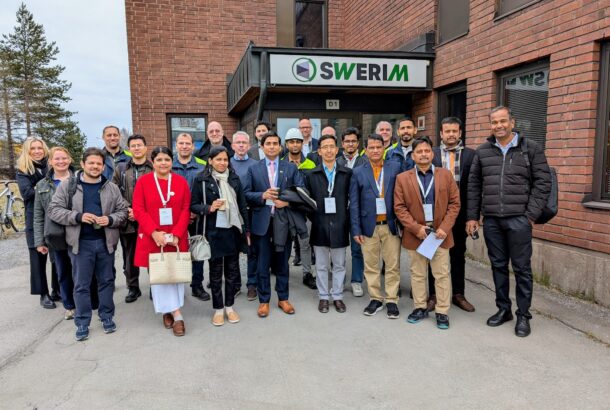
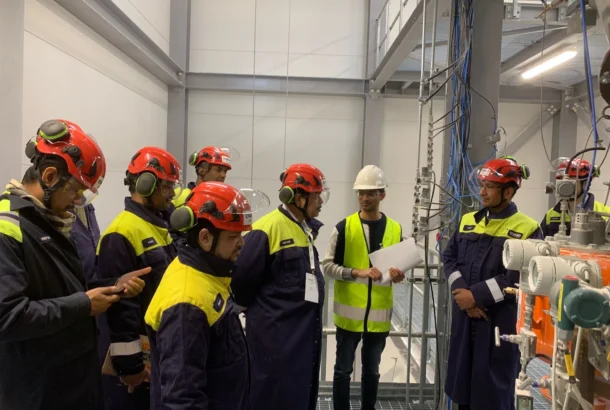
The two-day visit to northern Sweden concluded with a visit to metals research institute Swerim, to explore innovative decarbonization solutions, including LKAB’s experimental blast furnace.
Included in the delegation were representatives from five Indian government departments, with the Ministry of Environment, Forest and Climate Change (MoEFCC) as the lead, alongside the Department of Science and Technology (DST), the Ministry of Power (MoP), the Department for the Promotion of Industry and Internal Trade (DPIIT), and the Bureau of Energy Efficiency (BEE).
A focus on the future of cement
The Industry Transition Partnership consists of five working groups, including two with a specific sector remit – steel and cement – and three cross-cutting thematic groups covering innovation, finance and carbon markets. While steel was the focus in the north of Sweden, the delegation also included representatives from the cement industry who were keen to explore decarbonization pathways in their sector.
To advance collaborative efforts, a visit was made to SaltX Technology, a LeadIT member and green scale-up offering carbon-neutral quicklime and cement production through innovative electrification and CO² separation technology. At Hofors in Sweden, the company operates a demonstration test and research facility, the Electric Calciner Research Centre (ECRC), where the group explored the potential of electrification for reducing carbon emissions.
SaltX shares a location with the steel company Ovako, which operates one of the largest electrolyzers in Europe, producing tonnes of green hydrogen daily. In a world first, this fossil-free hydrogen is used for heating finished steel before the rolling process.
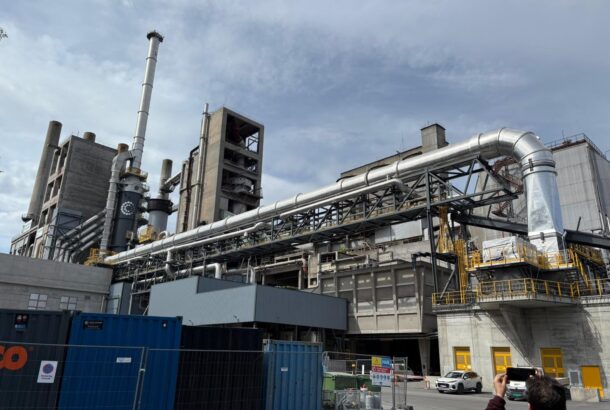
Another world first is the Heidelberg Materials carbon capture and storage (CCS) project at Brevik. The delegation travelled to Norway to learn more about this pioneering effort. Part of the Norwegian government’s Longship initiative, it is the first industrial-scale capture effort in the cement industry worldwide. Once fully operational, 400 000 tonnes of CO₂ per year – equating to 50% of the plant’s emissions – will be captured and transported by ship to an onshore terminal on the Norwegian west coast. From there, the liquefied CO₂ will be transported by pipeline to a storage site under the North Sea, where it will be permanently stored.
Carbon capture and utilization has been identified as a key technology warranting further investigation and development in India. The Department of Science and Technology (DST) recently unveiled a national initiative with five Carbon Capture and Utilisation (CCU) testbeds in the cement sector. Dr Neelima Alam, Associate Head 1 / Scientist F from DST, was part of the visiting delegation in her role as the lead for the innovation working group.
Next Steps
SEK 10 million funding is available for pilot and/or demonstration projects from Swedish companies to work with Indian partners to support the steel and cement transition in India. This call under the LeadIT Industry Transition Partnership is run by the Swedish Energy Agency and closes 1 September. Further funding opportunities for innovation projects in steel and cement are also being explored within the project collaborations. An announcement of the results form the work of the ITP is scheduled for COP 30 in Belem, Brazil.