


This year, optimism was in short supply heading into the Week, which coincides with the UN General Assembly meeting, also held in New York. Efforts to fight climate change are facing strong headwinds from political backtracking and competing global priorities. Yet, much to the surprise of many, CWNYC turned out to be the largest to date, with more than a thousand events, many showcasing the delivery of real climate action. This included an official side event hosted by the Leadership Group for Industry Transition exploring how to scale decarbonization globally in a just and equitable way.

Turning the Moment into Momentum
This LeadIT event gathered business leaders, policymakers, and climate financiers to discuss practical ways of maintaining cross-border cooperation and identifying policy and finance measures to accelerate investment, particularly in emerging markets. With a focus on solutions and lessons learned, these discussions will inform LeadIT’s work with the COP30 presidency’s Global Climate Action Agenda process.
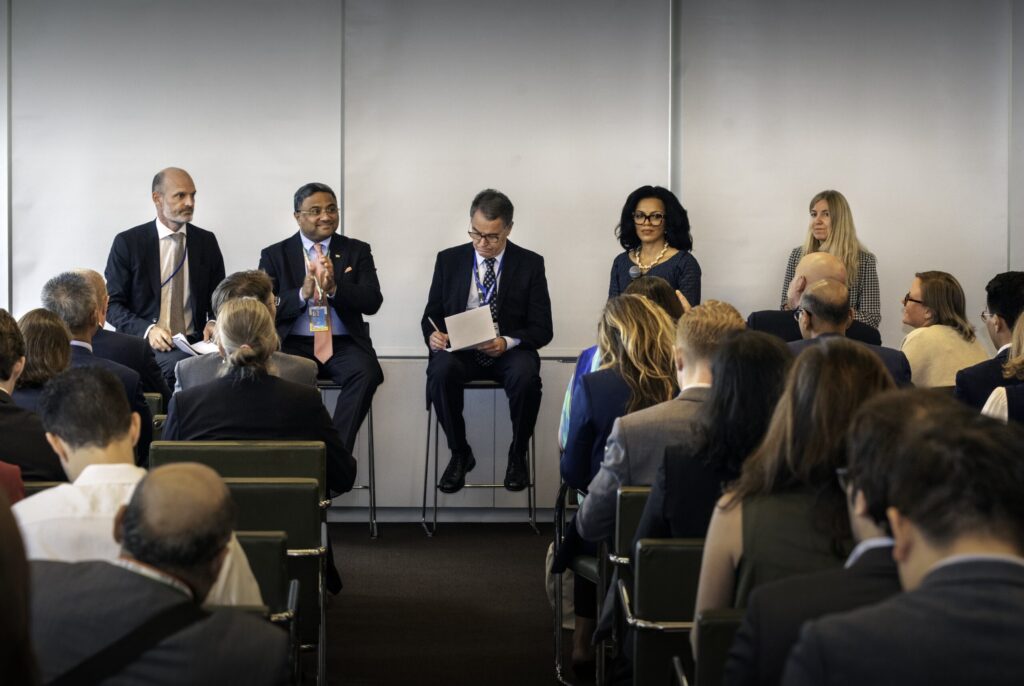
The event was hosted by LeadIT’s joint chairs, India and Sweden, with opening remarks from Tobias Axerup of the Swedish Ministry for Foreign Affairs and a keynote address from Secretary (West) Sibi George of India’s Ministry of External Affairs. Both emphasized the value of this strategic collaboration in advancing industry transition.LeadIT event. Speakers Tobias Axerup, Ministry of Foriegn Affairs, Sweden; Sibi George, Secretary (West), Ministry of External Affairs, India; Dan Ioschpe, COP30 High-level Champion; Tariye Gbadegesin, CEO, Climate Investments Fund; Susanne Kat, World Business Council for Sustainable Development. Photo: Marcus Haraldsson
Other keynote speeches were delivered by Dan Ioschpe, COP30 Climate High-Level Champion, and Tariye Gbadegesin, CEO of the Climate Investments Fund (CIF). For both, industry decarbonization is not just a climate imperative, it is an economic one as well. With Tariye Gbadegesin describing industry as “the sleeping giant of opportunity, unlocking jobs, competitiveness, and powering the economies of our future.
Key Takeaways
A central message emerged across the discussions: if we focus only on global geopolitics, we risk overlooking what matters most- the momentum building at the local level. The green transition is already happening, project by project, in towns, regions, and countries. This was particularly evident from the businesses in the room.
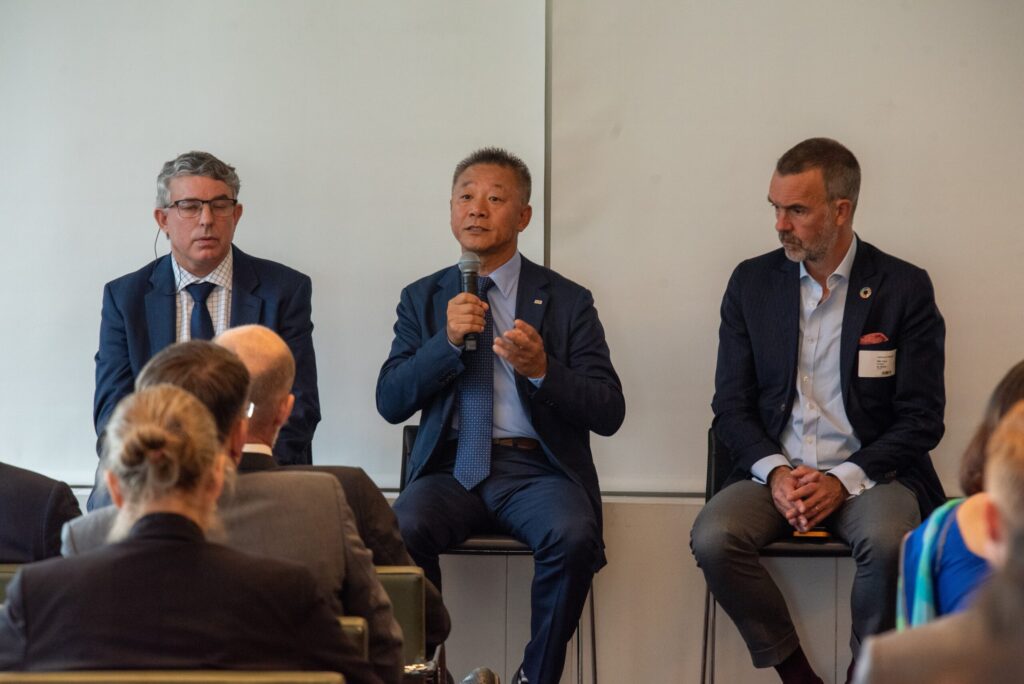
Martin Pei highlighted SSAB’s investment in a new green steel plant in Luleå, Sweden, where construction has begun, bringing the company one step closer to closing all its blast furnaces. Heidelberg Materials has recently commissioned the world’s first industrial-scale CCS facility at its Brevik, Norway cement plant, designed to remove 400,000 tonnes of CO₂ annually. Whilst Holcim is investing more than €500 million to transform its Obourg cement works in Belgium and forging new technology partnerships.
Spotlighting findings from the 2025 Business Breakthrough Barometer, Susanne Kat (WBCSD – World Business Council for Sustainable Development) confirmed that the companies they interviewed are not rolling back on their climate commitments.
LeadIT member countries were represented by Simon Cardy (South Africa) and Marina Skrinar (UK). Though at different points on the path to decarbonization, both emphasized that for the transition to succeed, it must matter to local communities, it must deliver jobs and a more secure economic future.
Finance as the Critical Lever
Despite progress, industry transition must accelerate if global climate goals are to be met. Policy barriers remain, but increasingly, finance has become the focus. CIF’s recently launched industry decarbonization programme will provide up to $250 million in concessional finance to Brazil, Egypt, Mexico, South Africa, Turkey, and Uzbekistan. This is a significant first step, but CIF hopes its contribution will be matched tenfold by private capital.
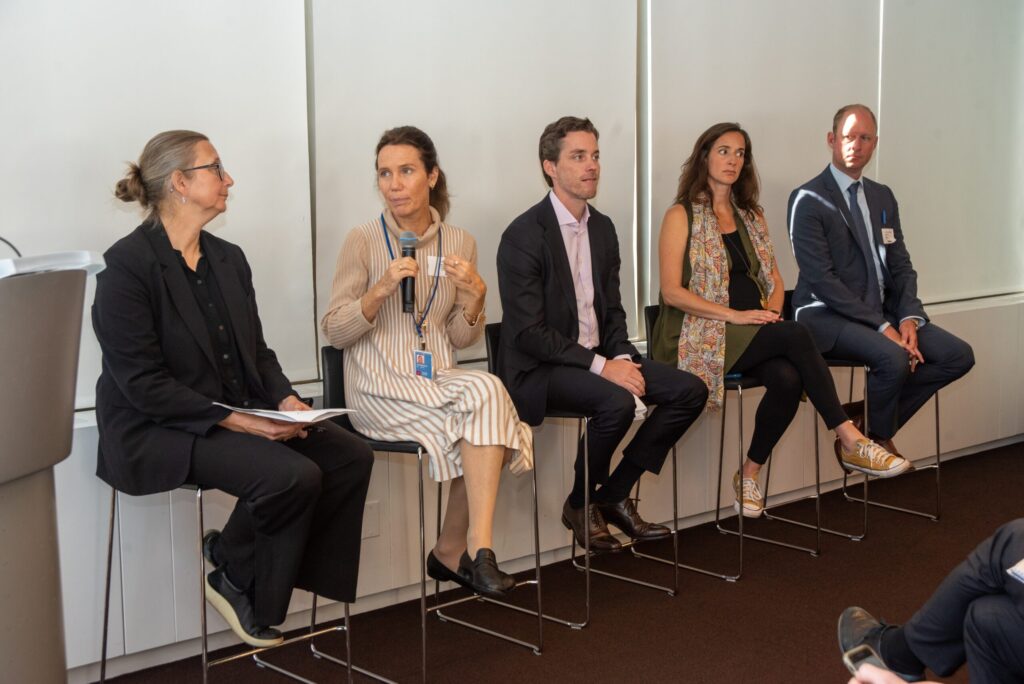
Fanny Missfeldt-Ringius (ESMAP – Energy Sector Management Assistance Program), Annika Otterstedt (SIDA), Pilar Carvajo Lucena (Third Derivative), and Clay Stranger (Sequoia Climate Foundation) discussed promising efforts to de-risk finance for industry transition. They highlighted how novel financial instruments and partnerships are unlocking private capital at every level, from start-ups to large international ventures, and how new approaches, such as collective procurement, could help bring down green premiums.
The final word went to Mattias Frumerie, Sweden’s Climate Ambassador, who used his closing remarks to look ahead to COP30.
Watch the full event
Engagements across Climate Week
Beyond its flagship event, LeadIT played a central role in several high-level conversations in New York.
LeadIT supported the UN Climate Action team in setting up the Secretary General’s High-Level Solutions Dialogue on Industrial Decarbonization, which brought together governments and industry organizations to explore how to advance industrial transformation globally. Sweden’s Minister for Climate and Environment, Romina Pourmokhtari, participated as co-chair of LeadIT, underscoring Sweden’s leadership in driving the industry transition agenda.
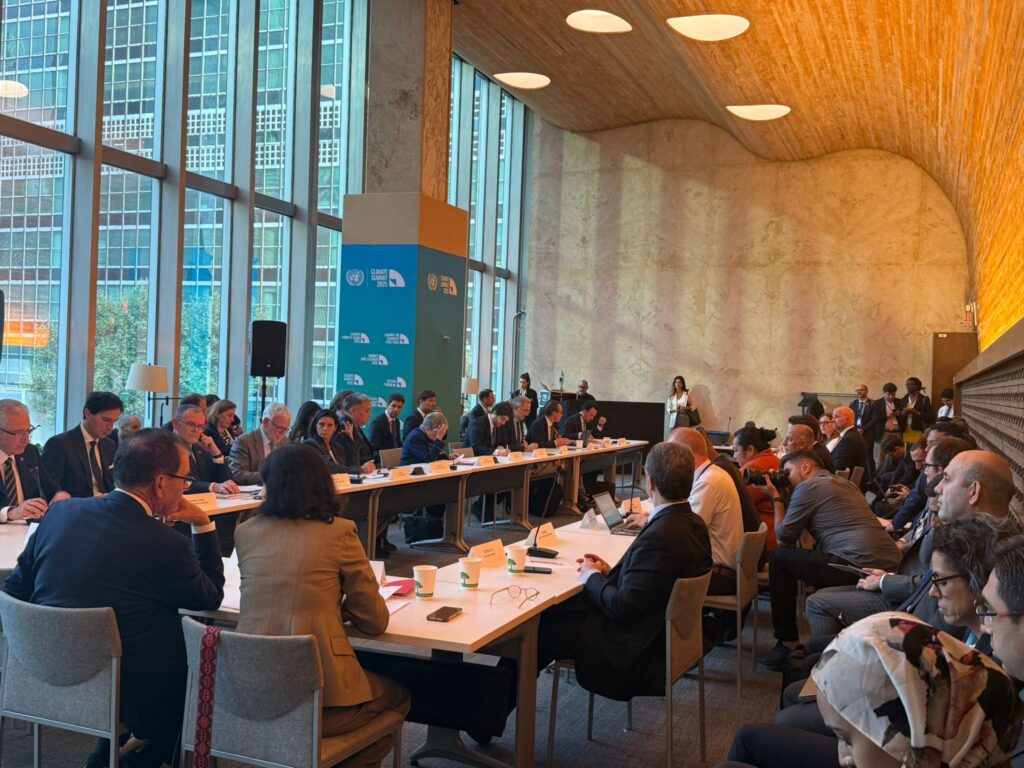
The dialogue highlighted positive momentum in technology and policy developments that are already driving change. But at the same time underscored that further policy reform, increased demand for low-emission solutions, and cross-border cooperation are essential to unlock the transition and private capital and ensure emerging markets are integrated into global supply chains.
Throughout the week, LeadIT also engaged in a wide range of events and discussions, including:
- Future in Motion: Unlocking Auto Demand for Green Steel, convened by Solutions For Our Climate.
- Climate Connect: Industry at the Forefront of Climate Action, hosted by the Consul General of Sweden in New York.
- Powering Up Real Economy Action: Shaping the COP30 Action Agenda & Business Breakthrough Barometer, organized by the Breakthrough Agenda and the World Business Council for Sustainable Development.
- Accelerating Development of Industrial Decarbonization Hubs Through Global Partnerships, under the auspices of the Climate High-Level Champions.
- Mobilizing Capital for Adaptation: Building the Ecosystem to Turn Strategies into Scaled Investment, assembled by the Boston Consulting Group.
- Climate Week New York – Beyond NDCs, led by the Exponential Roadmap Initiative.
In addition, joining a meeting of the Working Group on Green Industry Support for Emerging Markets and Developing Economies for COP30, reinforcing the importance of ensuring that industry transition pathways are inclusive and globally coordinated
The Road Ahead
Looking forward, LeadIT will continue to build momentum at COP30. It will participate as a member of one of the 30 Global Climate Action Agenda groups, specifically focusing on Accelerating Zero and Low-Emission Technologies in Hard-to-Abate Sectors. This platform will provide an opportunity to advance collective efforts, strengthen partnerships, and mobilize investment to scale solutions where they are most urgently needed.