


The LeadIT Green Steel Tracker considers the value chain of primary steel production, including iron and steel projects. Green steel production aims to minimize carbon dioxide emissions. This means reducing the use of fossil fuels and instead using renewable energy sources such as wind and solar either directly or through fuels produced with renewable energy, such as green hydrogen. Find our more about the methodology used in our tracker and about how green steel is defined.
How do you define green steel?
There is no universally accepted or legally binding definition of what “green steel” must be in terms of specific emissions thresholds, production methods, or sustainability criteria. The current state of standards and definitions for “green steel” is fragmented, evolving, and not yet globally harmonized. It generally means significantly lower emissions than conventional steel, but exact thresholds vary.
For this reason, the Tracker focuses more on the technology type and the energy source rather than any declared emissions intensity. We consider projects with technologies able to reach 85% reduction compared to average emission, that is, with the possibility to reach below 300 kg CO2 per tonne of steel, and having the potential for further reduction down below 100 kg CO2 per tonne of steel.
What is meant by low-carbon steel?
To understand the concept of low-carbon steel, it is important to distinguish between the energy source used in steel production and the actual composition of steel itself. Steel is made up of two primary elements: iron and carbon. As with other alloying elements that can be added in the steelmaking process, the characteristics of steel vary based on the amount of carbon. However, carbon in finished steel is only a few percent, typically some 20kg per tonne steel, varying depending on type of steel.
In the context of the Green Steel Tracker, the term ‘low-carbon steel’ refers to the carbon dioxide emissions generated during the process of transforming i) iron ore to iron and ii) iron into steel. The amount of carbon released here is on the order of 630kg per tonne steel as part of the 2.3tonnes of CO2 emitted per tonne steel. This term does not relate to the carbon added to the steel for its final composition.
When discussing low-carbon steel in this tracker, we are always referring to the efforts made to minimize the carbon footprint associated with the energy sources used in the primary steel value chain. The primary focus of the Green Steel Tracker is CO2 emissions, as these dominate steel production.
Nonetheless, it is worth noting that other emissions are generated in conventional primary steel production including sulphur dioxide (SO2) and nitrogen oxides (NOx), and there are other sources of Greenhouse Gas Emissions in other parts of the value chain, e.g., methane emissions in coal mines.
Which technologies have significantly lower CO2 emissions?
In the case of primary steel production, alternatives to significantly reduce carbon emissions in the iron and steelmaking processes include (listed in no particular order):
Hydrogen based:
Hydrogen direct reduced iron (H-DRI) fuelled with green hydrogen produced from renewable energy.
Electricity based (renewable energy):
Molten Oxide Electrolysis (MOE)
Electrowinning
Electric smelting reduction (ESM)
Other options that make use of biomass or still use fossil fuel but with comparatively lower emissions include:
Natural gas direct reduced iron (NG-DRI)
Smelting reduction (HIsarna)
Biomass-based reduction using biochar (also known as biocharcoal) from sustainably sourced biomass.
Although secondary steel production is not considered in the Green Steel Tracker, the Electric Arc Furnace (EAF) is both the method of choice for steel recycling and used in the steel making process after hydrogen based reduction.
What is the difference between primary and secondary steel production? Are projects from both tracked?
“Primary” and “secondary” steel production represent two distinct methods of creating steel, each with its own characteristics.
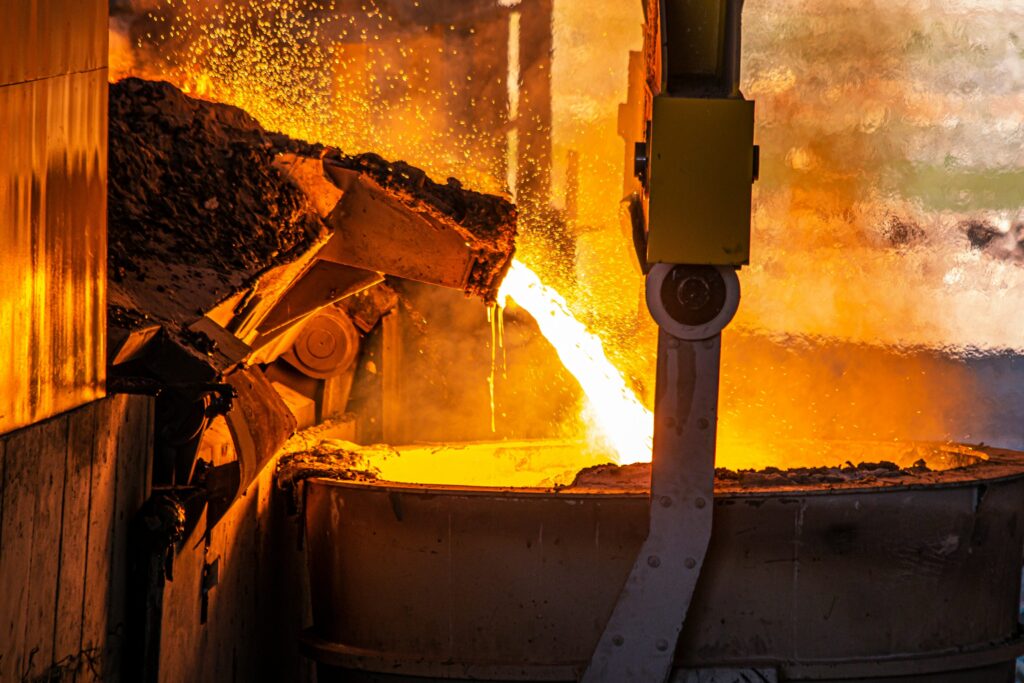
Primary steel refers to steel production from iron ore. Traditionally, blast furnaces have been the method used to transform iron ore into liquid iron, which is then processed in the basic oxygen furnaces to obtain steel. Primary steel production is energy-intensive and result in high carbon emissions due to the use of fossil fuels.
Secondary steel refers to the process of recycling existing steel products in the form of scrap metal. The most used method for secondary production is the electric arc furnace, which melts the scrap metal and transforms it into new steel. Secondary steel production usually requires less energy and emits fewer carbon emissions than primary production, and very low emissions if the electricity used is renewable.
LeadIT’s Green Steel Tracker focuses on projects related to primary steel production. While increasing secondary steel is important to use less virgin material, and in the early stages the tracker projects related to the transition from primary to secondary production were reviewed, the main goal is to monitor and categorize projects that contribute to lower carbon emissions in the primary steel production process as this is key to achieve net-zero carbon emissions. We acknowledge the relevance of the secondary route as a short-term response, however, reaching the goal of net zero emissions by 2050 will require transforming primary steel production.
What is a climate commitment? Which ones are ambitious in the steel industry?
We refer to a climate commitment as a formal pledge or promise made by a steel company or project, to take measurable actions aimed at reducing carbon emissions. Climate commitments are designed to align with global efforts to combat climate change, as outlined in the Paris Agreement.
In the context of the Green Steel Tracker, ambitious climate commitments in the steel industry are those that display both clear planning for, and tangible actions to achieving, net zero emissions as close in time as possible.
What makes a steel company compatible with the Paris Agreement?
To ensure compatibility with the Paris Agreement, both steel producers and their projects must be able to evaluate their contributions towards mitigating climate change, specifically by aligning with the goal of limiting global warming to 1.5 °C above pre-industrial levels. The following elements outline how a steel producer, and its projects can demonstrate commitment in harmony with the Paris Agreement:
Comprehensive Emission Reduction Targets: An essential starting point is the establishment of a comprehensive set of targets related to the curtailing of carbon dioxide emissions supported by a well-defined timeline. Long-term planning that encompasses milestones up to 2050, as well as intermediate objectives before 2050, showcases the integration of climate considerations into the business strategy.
Strategies for Achievement: The project or company should articulate the methods by which these carbon reduction milestones will be accomplished. This involves adopting innovative technologies, refining processes, and transitioning to energy sources in a way that significantly reduce emissions compared to conventional approaches. For example, a technological shift towards the use of renewable energy sources to power steel production processes serves as a tangible indicator of tangible action.
Progress Reporting: Regularly collecting, documenting, and openly sharing progress towards emission reduction targets is vital. Such transparent reporting, including emissions data, reduction objectives, and progress updates not only highlights the commitment to accountability, but also aids in assessing the alignment with the principles of the Paris Agreement.
In addition, achieving compatibility with the Paris Agreement requires a proactive approach that encompasses established emission reduction objectives, actionable strategies for implementation, and transparent reporting. By adhering to these elements, steel producers and their projects can effectively contribute to the global effort of mitigating climate change and advancing the Agreement’s objectives.
What is the difference between existing and emerging steel producers?
In essence, the distinction between existing and emerging steel producers lies in the maturity of their operations and quantifiable steel production volumes.
The term ‘existing steel producer’ refers to a well-established company that is already engaged in steel production. As a result, their steel production volume can be quantified and tracked over time. For primary steel, when established producers are included, they have historically employed either the blast furnace – basic oxygen route using coking coal, or direct reduction using fossil fuels, but have gained an interest in transitioning to low-carbon alternatives. Project can in turn be brownfield, converting existing sites to low carbon and retiring part of the old assets, or green field, building new assets on new sites.
What is the meaning of end-of-pipe emissions?
End-of-pipe emissions refers to the release of exhaust gases originating from manufacturing and production processes. To capture end-of-pipe emissions in the steel sector, carbon capture and storage (CCS) technology can be used. However, it’simportant to note that this approach does not reduce all the process emissions, and unless combined with biofuels, do not translate to significantly lower emissions, or 85% reduction or more as specified above.
Why collect information on the project scale, timeline and technology to be used?
The initial criterion for selecting projects for inclusion in the Green Steel Tracker is the availability of information indicating the project’s scale, execution timeline, and the technology chosen for producing low-carbon iron and steel. These three pieces of information constitute what we name the project outline, serving as a preliminary indicator of its significance and ambition.
Why are investment announcements tracked?
Project investment data is relevant for the Green Steel Tracker because it gives a sense of how tangible the project is, and the commitment of the company to the transition to less carbon dioxide emission intensive technologies. In parallel, it supports the efforts of having an overview of the allocation of financial resources on low-carbon-dioxide steel projects. When available, information on project investment is included.
Tracking investments provides transparency on the financial commitments driving the transformation of the steel industry.
What are greenfield and brownfield projects, and what are the differences?
A ‘greenfield project’ refers to a new project that is started from zero on a new site. In other words, the project is initiated from scratch, with no existing infrastructure or facilities in place. In the context of Green Steel Tracker, these projects imply new capacity for steel production is being built and that the plant will use a low-carbon technology.
Conversely, a ‘brownfield project’ involves re-purposing an already existing steel plant to produce low-carbon steel. This can involve dismantling or demolishing part of the assets, but also keeping some assets and infrastructure. Therefore, the plant undergoes adaptation to allow for the installation of low-carbon equipment. In short, an existing plant is upgraded.
What is ‘carbon direct avoidance’ and ‘carbon capture and usage’ in low-carbon steel production and what are the differences?
In the Green Steel Tracker, projects using Carbon Direct Avoidance (CDA) technology that leads to permanently avoiding carbon emissions have priority. Consequently, technologies focused solely on captured carbon used in some other process, while followed in a previous tracker version, are not part of the main tracking.
CDA prevent or eliminate carbon emissions from the steel production process. This can be achieved by adopting alternative energy sources that replace fossil fuels, such as renewable energy and renewably produced hydrogen. CDA serves as a proactive approach to reduce carbon emissions during iron and steel production (EUROFER AISBL, 2019).
Carbon capture utilisation (CCU) technologies refer to when carbon emissions from the steel production process are captured and stored, and transformed into other carbon-based products, sometimes also referred to as Smart Carbon Usage (SCU) (EUROFER AISBL, 2019). Emission reductions here depend on the system boundary drawn, and on the lifecycle of these products, and this means that process-related carbon emissions are not eliminated entirely.